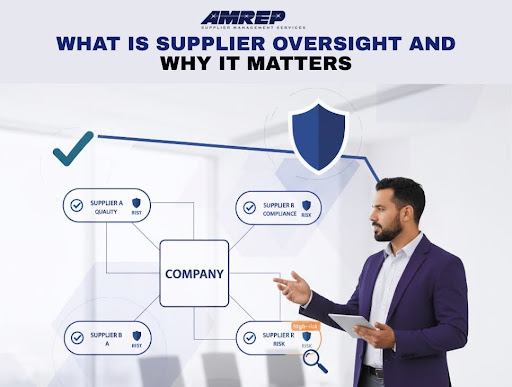
What is supplier oversight and why it matters
Organizations now rely on external suppliers for critical inputs that directly affect performance. As supply chains expand in complexity, the need for strong and consistent oversight becomes indispensable. Vendors have evolved into strategic partners whose strengths or weaknesses shape business outcomes.
Supplier oversight is not only a procedural requirement but a critical function that directly supports business performance. It affects product quality, compliance, brand reputation, cost efficiency, and long-term resilience.
.
This guide explains what effective supplier oversight involves, why it is essential, and how organizations can build a strong oversight framework that ensures sustainable success.
What Is Supplier Oversight?
Supplier oversight refers to the processes and systems an organization uses to evaluate, monitor, and manage its suppliers throughout the lifecycle of the business relationship. It involves ensuring that suppliers meet agreed-upon standards for quality, performance, compliance, ethical conduct, sustainability, and overall risk management.
At its core, supplier oversight is about visibility, accountability, and alignment. Organizations must understand their suppliers’ capabilities and limitations, continuously monitor performance, and ensure that expectations are met consistently.
Key Components of Supplier Oversight
To fully understand how supplier oversight works in practice, it’s important to look at the core components that make it effective.
1. Supplier Evaluation and Selection
This stage involves assessing potential suppliers based on criteria such as quality controls, financial stability, technical capabilities, capacity, pricing, and compliance with industry regulations. Selecting the right suppliers from the start reduces future risks and operational disruptions.
2. Contracting and Performance Expectations
Organizations define expectations through service-level agreements (SLAs), key performance indicators (KPIs), and contractual requirements. These documents set the foundation for measurable accountability.
3. Ongoing Monitoring and Evaluation
Performance reviews, audits, site visits, data monitoring, and feedback mechanisms help organizations assess whether suppliers continue to meet standards over time. This process helps identify deviations early.
4. Risk Management and Mitigation
Supplier oversight includes identifying potential risks such as financial, operational, geopolitical, ethical, cyber, or environmental risks and creating strategies to mitigate them. This is especially important when suppliers operate in high-risk regions or industries.
5. Relationship Management
Strong supplier relationships foster collaboration, innovation, and continuous improvement. Oversight is not only about control; it is about building mutually beneficial partnerships.
6. Corrective Actions and Continuous Improvement
When issues arise, organizations must work with suppliers to define corrective action plans. Oversight ensures problems are documented, addressed, and prevented from recurring.
Why Supplier Oversight Matters
Effective supplier oversight matters because suppliers play an integral role in an organization’s success. Their performance directly influences your quality, cost, compliance, and market reputation. Below are the main reasons why strong oversight is essential.
1. Ensuring Product and Service Quality
Quality Starts with the Supply Chain
Poor supplier quality can result in defective products, production delays, customer complaints, and costly recalls. Companies often discover that internal quality controls are not enough; the issues stem from external sources.
Supplier oversight ensures that:
- Quality systems are in place and followed
- Raw materials meet specifications
- Regulatory standards are adhered to
- Manufacturing processes are consistent
The Cost of Poor Quality
A single quality failure at the supplier level can ripple through the company’s entire value chain, impacting customer satisfaction, profitability, and brand trust. Oversight minimizes these risks by ensuring issues are detected early.
2. Reducing Financial and Operational Risk
Unmanaged Suppliers Can Disrupt Operations
Operational continuity depends on suppliers delivering the right products, in the right quantities, at the right time. When oversight is limited, companies face risks such as:
- Stockouts and delays
- Production shutdowns
- Excess inventory
- Increased procurement costs
Financial Stability Matters
Supplier insolvency can cripple production and force companies to scramble for alternatives. Oversight processes that assess financial health allow organizations to anticipate potential disruptions proactively.
3. Enhancing Regulatory and Compliance Assurance
Compliance Is Non-Negotiable
Industries such as healthcare, automotive, aerospace, and food require strict adherence to regulations. Supplier non-compliance can lead to legal penalties, certification loss, and severe reputational damage.
With proper oversight, companies can ensure suppliers comply with:
- Industry standards (ISO, GMP, etc.)
- Environmental regulations
- Labor and ethical standards
- Data protection and cybersecurity rules
Avoiding Shared Liability
Regulators increasingly hold organizations accountable for their entire supply chain. Oversight helps demonstrate due diligence and reduces legal exposure.
4. Strengthening Brand Reputation and Trust
Reputation Depends on Supplier Conduct
In an age where consumers value transparency and ethics, a supplier’s actions can directly impact your brand. Whether it’s labor abuses, environmental violations, or product safety issues, supplier misconduct becomes your problem.
Supplier oversight helps protect your brand by ensuring:
- Ethical sourcing practices
- Human rights compliance
- Environmentally sustainable operations
- Transparent reporting
Organizations that oversee their supply chains gain consumer trust and differentiate themselves in competitive markets.
5. Supporting Sustainability and ESG Goals
ESG Is Now a Business Imperative
Environmental, social, and governance (ESG) performance is critical for investors, customers, and regulators. Because a significant portion of a company’s environmental footprint comes from suppliers, oversight is necessary to meet ESG commitments.
Effective oversight supports:
- Carbon footprint tracking
- Sustainable sourcing
- Waste reduction
- Fair labor practices
- Supply chain transparency
Companies with strong ESG oversight also enjoy better access to capital, improved stakeholder relationships, and enhanced long-term resilience.
6. Driving Innovation and Continuous Improvement
Suppliers as Strategic Partners
Suppliers often bring fresh ideas, technologies, and capabilities that can help companies innovate. Oversight ensures the relationship fosters collaboration rather than conflict.
Organizations benefit from:
- Process optimization
- Cost-saving innovations
- Technology advancements
- Improved quality initiatives
A well-managed supplier relationship transforms vendors into strategic allies.
7. Increasing Supply Chain Resilience
Resilient Supply Chains Need Visibility
Disruptions such as pandemics, natural disasters, political instability, or market fluctuations expose vulnerabilities in supply chains. Supplier oversight gives organizations the visibility needed to anticipate, adapt, and recover quickly.
Oversight strategies such as multi-sourcing, diversification, and risk mapping help companies remain agile in the face of uncertainty.
How to Build an Effective Supplier Oversight Framework
Creating a strong supplier oversight framework is not a one-time project; it is an ongoing process. Organizations must adopt a systematic and structured approach to managing suppliers throughout the relationship lifecycle.
Below are the essential building blocks.
1. Define Roles, Responsibilities, and Governance
A clear governance structure ensures accountability. Organizations should appoint teams responsible for:
- Supplier onboarding
- Performance monitoring
- Audit planning
- Risk evaluation
- Corrective action oversight
Clear roles prevent oversight gaps and ensure consistency across departments.
2. Develop Risk-Based Supplier Segmentation
Not all suppliers require the same level of oversight. Companies should categorize suppliers based on:
- Criticality to operations
- Impact on product quality
- Risk exposure (financial, geographic, regulatory)
- Strategic importance
High-risk suppliers require more frequent audits, stricter controls, and deeper engagement.
3. Implement Robust Performance Monitoring Mechanisms
Monitoring tools may include:
- KPI dashboards
- Quality control checks
- Scorecards and performance reviews
- Routine audits and assessments
- Supplier self-documentation
- Real-time data analysis
This approach provides continuous visibility into supplier performance.
4. Establish Clear Communication and Collaboration Channels
Communication is the backbone of effective oversight. Organizations should maintain open, transparent communication with suppliers to:
- Share expectations
- Resolve issues efficiently
- Support joint improvement projects
- Provide feedback and guidance
Proactive collaboration builds trust and strengthens long-term partnerships.
5. Use Technology to Improve Oversight Efficiency
Modern supplier management platforms provide:
- Real-time data tracking
- Automated assessments
- Risk scoring
- Compliance management
- Document storage
- Analytics and reporting
Technology enhances accuracy, accelerates decision-making, and supports scalability across complex supply chains.
6. Conduct Regular Audits and On-Site Assessments
Audits verify whether suppliers are meeting expectations and identify hidden risks. Types of audits include:
- Quality audits
- Environmental and sustainability audits
- Regulatory compliance assessments
- Social responsibility audits
- Cybersecurity evaluations
Audit findings help companies create targeted corrective action plans.
7. Develop a Structured Corrective Action Process
A strong corrective action process ensures issues are properly addressed. It includes:
- Root cause analysis
- Action plan development
- Implementation timelines
- Follow-up assessments
- Documentation and reporting
Consistent follow-through is critical to long-term supplier performance improvement.
8. Promote Continuous Improvement and Long-Term Alignment
Supplier oversight is most effective when it fosters a culture of continuous improvement. Companies should:
- Encourage innovation
- Share best practices
- Offer training or support
- Provide incentives for high performance
Strong alignment keeps suppliers engaged and committed to long-term success.
How Supplier Oversight Is Transforming for Tomorrow
As supply chains evolve, supplier oversight will become even more critical. Trends shaping the future include:
1. Increased Use of AI and Predictive Analytics
AI will help organizations predict supplier risks, automate monitoring, and forecast disruptions.
2. Greater Emphasis on ESG and Transparency
Regulators and consumers will demand more visibility into supply chain ethics and sustainability.
3. Enhanced Cybersecurity Requirements
As digital collaboration increases, supplier cyber risks will require stricter oversight.
4. More Collaborative Supplier Partnerships
Companies will shift from transactional relationships to long-term strategic partnerships.
The organizations that adapt quickly will enjoy more resilient, ethical, and competitive supply chains.
For a deeper look at how to evaluate and enhance supplier results, read our comprehensive resource on Supplier Performance Management – Everything You Need To Know.
Empower Your Organization Through Better Supplier Management
Supplier oversight is essential for ensuring quality, minimizing risks, maintaining compliance, supporting sustainability, and strengthening brand reputation. In a world where supply chain disruptions can make or break a business, companies must prioritize building robust oversight systems that promote transparency, collaboration, and continuous improvement.
As a leading Supplier Quality Management Company, AMREP Mexico understands that strong supplier oversight is the cornerstone of consistent quality, operational resilience, and long-term business success. As global supply chains continue to evolve, we remain committed to helping organizations gain the visibility, control, and confidence they need to thrive.
With our expertise and on-the-ground support, you can strengthen your supplier performance, reduce risks, and unlock greater value at every stage of your supply chain.
Partner with AMREP Mexico and build a future where your suppliers deliver excellence every time.