Supply Chain Audit Checklist: End-to-End Checklist for Buyers
Supply chain audits are no longer limited to quality compliance or supplier scorecards. For buyers, they are a strategic tool for understanding risk, verifying capability, and ensuring suppliers can reliably support business objectives over time. As supply chains become more complex and exposed to disruption, buyers need a structured way to look beyond promises and contracts and assess how suppliers truly operate.
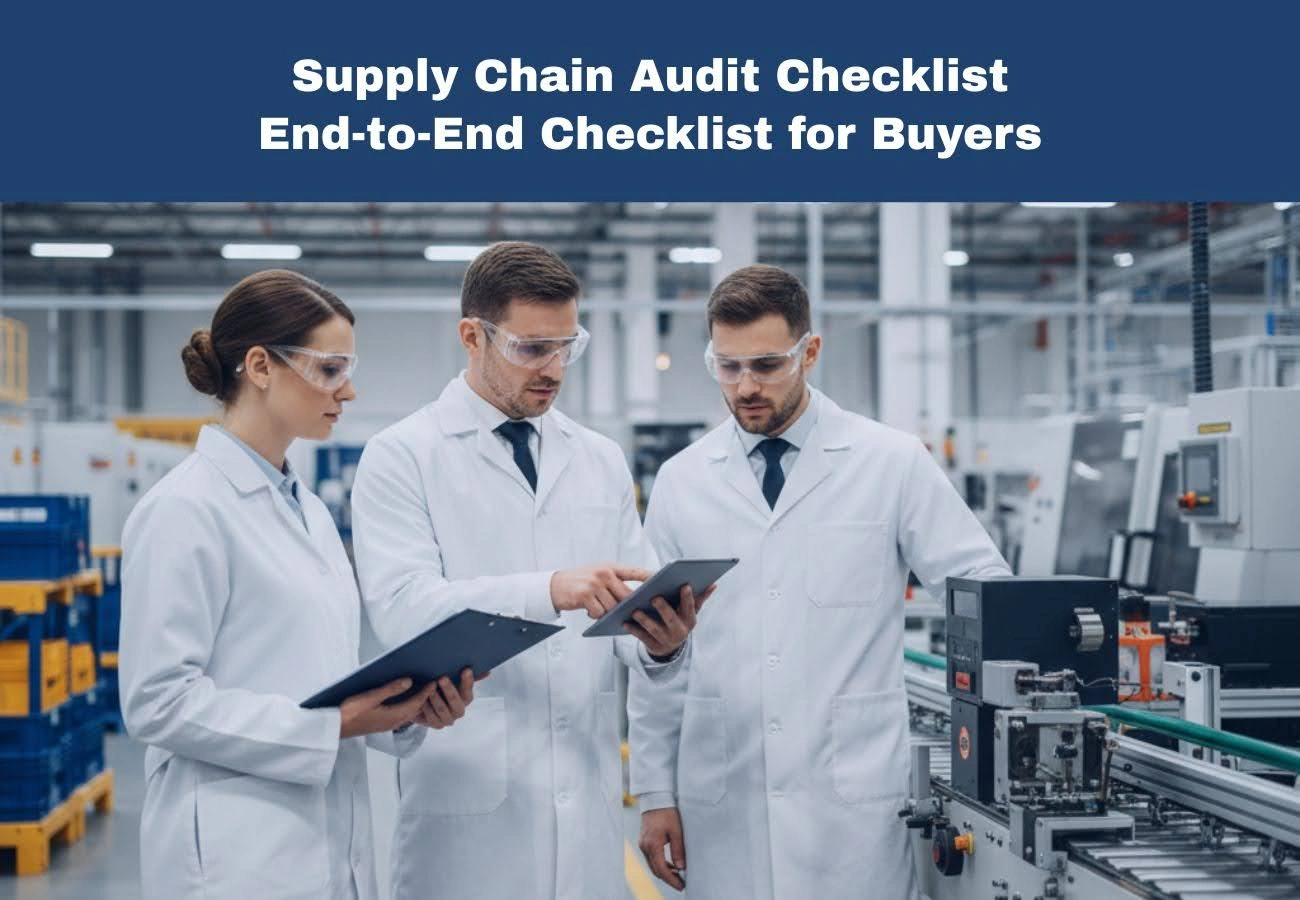
This end-to-end supply chain audit checklist is designed specifically for buyers. It provides a practical, risk-aware framework to evaluate suppliers across governance, operations, quality, logistics, compliance, and resilience. Used correctly, it helps buyers make informed sourcing decisions, prevent costly surprises, and build stronger, more reliable supplier relationships.
What Is the Purpose of a Supply Chain Audit from a Buyer’s Perspective?
Before applying any checklist, buyers must be clear about why the audit is being performed.
From a buyer’s perspective, a supply chain audit exists to answer fundamental questions:
- Can this supplier consistently meet requirements?
- Where are the hidden risks?
- How resilient is the supplier when conditions change?
- How effectively are problems prevented, not just corrected?
A strong audit is not about assigning blame. It is about understanding how risk is managed across the supply chain and whether the supplier’s systems, culture, and processes align with long-term business needs.
Who Is the Supplier and How Is the Business Structured?
Every effective audit begins with a clear understanding of the supplier’s organization and operating model.
Key Questions Buyers Should Ask
- What is the legal structure and ownership of the supplier?
- Where are operations located, and what activities occur at each site?
- Who holds decision-making authority?
- How dependent is the supplier on your business?
- Are subcontractors or sub-tier suppliers involved?
Understanding the supplier’s structure helps buyers identify dependency risks, financial exposure, and operational complexity early in the relationship.
How Strong Are the Supplier’s Governance and Management Systems?
Governance determines how consistently a supplier performs and how effectively it responds to issues.
Key Questions Buyers Should Ask
- Is there a documented management system?
- Are responsibilities clearly defined and understood?
- How does leadership review performance and risk?
- Are internal audits or self-assessments conducted?
- How are issues escalated and resolved?
Strong governance indicates maturity and predictability. Weak governance often results in reactive behavior, unclear accountability, and recurring problems.
How Does the Supplier Manage Its Own Sourcing and Procurement?
A buyer’s risk does not stop at the first tier of the supply chain.
Key Questions Buyers Should Ask
- How are sub-suppliers selected and approved?
- Are requirements clearly flowed down?
- How are critical materials and services monitored?
- Are alternative sources identified for high-risk items?
- Is traceability maintained throughout the supply chain?
Suppliers that lack control over their own sourcing create blind spots that can surface as delays, quality issues, or compliance failures.
Can the Supplier Consistently Meet Operational and Capacity Requirements?
Operational capability must be verified, not assumed.
Key Questions Buyers Should Ask
- Does capacity match current and forecasted demand?
- How is production planned and scheduled?
- Are bottlenecks identified and managed?
- How is equipment maintained?
- Are operators adequately trained?
Buyers should look for evidence that capacity claims are realistic and that the supplier can handle variability without sacrificing quality or delivery.
How Effective Are the Supplier’s Quality Management and Process Controls?
Quality systems reveal whether a supplier prevents problems or merely reacts to them.
Key Questions Buyers Should Ask
- How are quality risks identified and controlled?
- Are inspections and process controls appropriate?
- How are nonconformances handled?
- Are root causes consistently identified?
- Do corrective actions prevent recurrence?
Buyers should evaluate process stability and discipline, not just defect rates. A low defect rate today does not guarantee low risk tomorrow.
How Are Changes Managed and Controlled Across the Supply Chain?
Uncontrolled change is one of the most common sources of supply chain failure.
Key Questions Buyers Should Ask
- Is there a formal change management process?
- Are changes communicated in advance?
- Are risks assessed before implementation?
- Is revalidation performed when required?
- Have past changes been managed successfully?
Suppliers with weak change control often introduce risk unintentionally, even when performance history appears strong.
How Well Are Inventory and Logistics Managed?
Inventory and logistics practices directly affect delivery reliability and responsiveness.
Key Questions Buyers Should Ask
- How is inventory accuracy maintained?
- Are safety stock levels defined and reviewed?
- How are obsolete or aging items managed?
- Are packaging and labeling standards controlled?
- How are transportation risks addressed?
Buyers should ensure inventory strategies support service levels rather than compensate for poor planning or unstable processes.
How Reliable Is the Supplier’s Delivery Performance and Customer Service?
Delivery reliability is a visible indicator of supply chain health.
Key Questions Buyers Should Ask
- How is on-time delivery measured?
- Are lead times stable and realistic?
- How are delays communicated?
- How are urgent or expedited requests handled?
- Is customer service proactive or reactive?
Reliable suppliers communicate early, manage expectations, and take ownership of issues.
How Does the Supplier Identify and Manage Supply Chain Risk?
Resilience has become a core buyer concern.
Key Questions Buyers Should Ask
- Are risks formally identified and assessed?
- Are business continuity plans documented?
- Are contingency plans tested?
- Are alternate facilities or resources available?
- How has the supplier responded to past disruptions?
Buyers should assess whether risk management is theoretical or operationally embedded.
Is the Supplier Compliant with Regulatory and Contractual Requirements?
Compliance failures create disproportionate risk.
Key Questions Buyers Should Ask
- Which regulations apply to the supplier?
- Are certifications current and applicable?
- Are records complete and controlled?
- Are environmental, health, and safety practices effective?
- Are labor and trade requirements met?
Buyers should confirm compliance through evidence, not assumptions.
Many supply chain risks originate during initial supplier qualification. A deeper look at technical evaluations during onboarding is covered in How to Conduct a Technical Evaluation of a New Supplier in Mexico.
How Does the Supplier Address Sustainability and Ethical Practices?
Sustainability and ethics increasingly influence sourcing decisions.
Key Questions Buyers Should Ask
- How is environmental impact managed?
- Are ethical sourcing principles enforced?
- Are labor practices transparent?
- Are suppliers held accountable for misconduct?
- Is performance measured and reported?
Ethical failures can create long-term reputational and operational damage.
How Is Data Managed, Protected, and Reported?
Reliable data enables effective oversight.
Key Questions Buyers Should Ask
- How is data accuracy ensured?
- Are KPIs consistently defined?
- How is sensitive information protected?
- Are systems secure and backed up?
- Is reporting timely and actionable?
Buyers should be cautious when decisions rely on manual or inconsistent data.
How Does the Supplier Measure Performance and Drive Continuous Improvement?
Continuous improvement reduces long-term cost and risk.
Key Questions Buyers Should Ask
- Are KPIs clearly defined and reviewed?
- Are improvement initiatives active?
- Are employees engaged in problem solving?
- Are lessons learned captured and applied?
- Is improvement sustained over time?
Suppliers that improve systematically are more resilient and reliable partners.
How Are Audit Findings Tracked and Actions Closed?
An audit’s value depends on follow-through.
Key Questions Buyers Should Ask
- Are findings clearly documented and prioritized?
- Is ownership assigned for actions?
- Are timelines realistic and monitored?
- Is effectiveness verified?
- Are recurring issues addressed?
Repeated findings signal systemic weakness and increased risk.
How Can Buyers Use This Checklist Effectively?
A checklist is a guide, not a substitute for judgment.
Best Practices for Buyers
- Tailor the checklist based on supplier risk
- Focus on critical areas rather than auditing everything equally
- Combine document review with observation and interviews
- Encourage open dialogue
- Use audit results to strengthen relationships, not just enforce compliance
Many supplier audit risks stem from inadequate onboarding and training. Learn more in Effective Ways to Train New Overseas Suppliers.
AMREP Mexico Conducts Supply Chain Audits as a Strategic Risk Management Tool
At AMREP Mexico, supply chain audits are not treated as a checklist exercise. They are a deliberate part of how we evaluate risk, verify supplier capability, and support consistent performance across our supply base through our Supplier Quality Services. By applying an end to end, question driven audit approach, we enable better buying decisions, stronger supplier accountability, and a more resilient supply chain that supports our operations today and adapts confidently to future challenges.