How Do You Avoid Fake Suppliers & Scams When Sourcing Medical PPE?
To avoid fake suppliers and scams when sourcing medical Personal Protective Equipment (PPE), you should work only with verified manufacturers or trusted distributors. Verify factory operations, supplier credentials, and product compliance before making payments or approving production.
Common PPE scams include fake factories, counterfeit products, forged certifications, shipment fraud, and suppliers disappearing after receiving deposits. According to the World Health Organization (WHO), counterfeit and substandard medical products remain a major global supply chain risk.
This guide explains how to identify fake PPE suppliers, spot sourcing red flags, and reduce procurement risks through proper verification and inspections.
Why Medical PPE Sourcing Is Vulnerable to Fraud
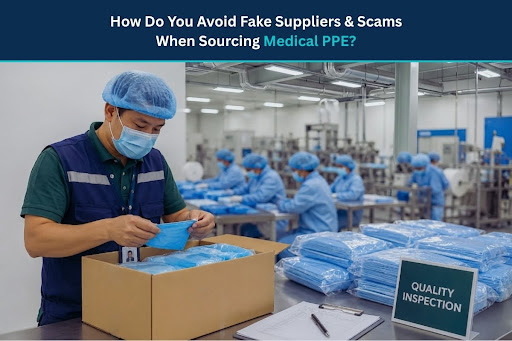
Medical PPE products operate within highly regulated global supply chains. During periods of increased demand, many temporary suppliers and intermediaries enter the market without proper manufacturing capabilities or compliance controls.
Unlike general consumer goods, non-compliant PPE products can create:
- Healthcare safety risks
- Import restrictions
- Customs seizures
- Legal liability
- Product recalls
- Contract disputes
According to the World Customs Organization (WCO), counterfeit medical product seizures increased significantly during global healthcare emergencies, especially involving masks, gloves, and respirators.
Because PPE products directly impact healthcare safety, buyers must verify both supplier legitimacy and operational capability before placing orders.
Most Common Fake PPE Supplier Scams
Understanding how sourcing scams work helps buyers identify risks earlier.
1. Fake Factory Claims
Some suppliers claim to own manufacturing facilities but actually operate as:
- Temporary intermediaries
- Small trading offices
- Unauthorized resellers
Real-World Example
A buyer sourcing surgical masks receives factory images from a supplier claiming large-scale production capacity. A third-party site audit later reveals the address belongs to a shared commercial office with no active manufacturing operations.
Warning Signs
- No verifiable production address
- Refusal to provide live factory access
- No machinery or workforce information
- Stock images used as factory photos
2. Product Substitution
Some suppliers deliver compliant samples during negotiation but switch to lower-quality materials during mass production.
Real-World Example
A distributor approves medical-grade nitrile glove samples, but the final shipment contains thinner industrial-grade gloves with inconsistent material quality.
High-Risk Products
- N95 respirators
- Disposable gloves
- Surgical masks
- Isolation gowns
This is one of the most common risks in PPE sourcing because buyers often inspect only initial samples.
3. Shipping Document Fraud
Certain scam suppliers provide:
- Fake bills of lading
- Invalid tracking numbers
- False export documentation
Real-World Example
A PPE importer receives shipment confirmation documents for a container of face masks. The logistics carrier later confirms that the shipment reference number does not exist.
Practical Tip
Always verify shipping documents directly with:
- Freight forwarders
- Shipping lines
- Customs brokers
4. Payment Diversion Scams
Fraudsters sometimes hack supplier email accounts or impersonate legitimate companies to redirect payments.
Warning Signs
- Last-minute bank account changes
- Urgent payment requests
- Different beneficiary names
- Communication outside official company channels
Practical Tip
Always confirm payment instructions through:
- Video verification
- Direct phone confirmation
- Approved procurement contacts
Legitimate PPE Supplier vs Fake Supplier
| Legitimate Supplier | Fake Supplier |
|---|---|
| Provides traceable business records | Uses unverifiable company details |
| Has consistent communication | Shares conflicting information |
| Allows factory verification | Avoids inspections or site visits |
| Uses professional documentation | Sends incomplete or generic files |
| Understands technical specifications | Gives vague product answers |
| Maintains stable payment procedures | Requests rushed payment transfers |
This comparison helps procurement teams identify supplier risks early in the sourcing process.
Manufacturer vs Trading Company: Why It Matters
Not all trading companies are fraudulent, but buyers should clearly understand who controls production and quality management.
Signs of a Genuine Manufacturer
- Own production lines
- Dedicated PPE specialization
- Direct engineering or technical support
- Clear production capacity data
- Factory workforce visibility
Signs of a Trading Company
- Sells unrelated product categories
- Cannot explain manufacturing processes
- Depends heavily on third-party factories
- Limited technical knowledge
For regulated PPE products, manufacturers generally provide better production visibility and quality control consistency.
High-Risk Sourcing Regions and Challenges
Medical PPE is commonly sourced from:
- China
- Southeast Asia
- International export trading hubs
These regions contain many legitimate manufacturers, but buyers may also encounter:
- Temporary exporters
- Shell companies
- Compliance fraud
- Multi-layer subcontracting
Practical Tip
When sourcing internationally:
- Verify export history
- Confirm operational longevity
- Review customer references
- Use local inspection partners
Cross-border sourcing without supplier validation significantly increases fraud exposure.
How to Verify a Medical PPE Supplier
A structured supplier verification process helps reduce procurement risks before production begins.
Step 1: Verify Business Registration
Confirm:
- Company registration
- Export licenses
- Ownership details
- Operational history
- Manufacturing permits
This helps identify shell companies and temporary exporters.
Step 2: Conduct a Supplier Factory Audit
A factory audit evaluates:
- Operational legitimacy
- Production infrastructure
- Workforce size
- Manufacturing capability
- Process controls
Real-World Example
A PPE buyer discovers during a supplier audit that a company claiming high-volume respirator production only operates two small assembly lines incapable of meeting the quoted order quantity.
This prevents major sourcing failures before production begins.
Step 3: Review Product Compliance Documentation
Medical PPE products may require:
- FDA registration
- CE marking
- ISO 13485
- ASTM testing
- EN compliance standards
Practical Tip
Always validate compliance documents directly through official regulatory or certification databases.
Step 4: Perform Pre-Shipment Quality Inspections
Pre-shipment inspections verify:
- Product consistency
- Packaging accuracy
- Labeling compliance
- Shipment quantities
- Export readiness
This reduces the risk of receiving incorrect or non-compliant products.
Procurement Best Practices for Safer PPE Sourcing
1. Start with Trial Orders
Avoid placing large first-time orders with unverified suppliers.
Small trial shipments help evaluate:
- Product consistency
- Delivery performance
- Communication reliability
- Operational professionalism
2. Diversify Supplier Sources
Relying on a single PPE supplier increases operational risk during:
- Supply shortages
- Production delays
- Quality failures
- Regulatory disruptions
Maintaining multiple approved suppliers improves sourcing flexibility.
3. Use Clear Procurement Contracts
Well-structured supplier agreements should define:
- Product specifications
- Quality expectations
- Inspection rights
- Delivery timelines
- Non-compliance penalties
This reduces legal and operational disputes.
4. Monitor Supplier Performance Continuously
Supplier verification should continue after onboarding through:
- Supplier scorecards
- Ongoing inspections
- Periodic audits
- Performance reviews
Operational quality can change over time without active oversight.
Learn more about how to evaluate supplier quality, reliability, and performance with our guide on How to Rate Suppliers with Scorecard and Criteria.
Why Supplier Audits Matter Before Production
Supplier audits provide direct operational visibility before mass production begins.
A professional supplier audit helps verify:
- Factory legitimacy
- Production capability
- Workforce conditions
- Quality management systems
- Process consistency
For medical PPE buyers, supplier audits significantly reduce sourcing uncertainty and improve procurement confidence.
Before onboarding new suppliers, businesses should also review key evaluation criteria. Read our guide on Questions to Ask a New Supplier Before You Start to strengthen supplier selection decisions.
The Future of PPE Supplier Verification
Medical PPE sourcing is becoming increasingly data-driven. Companies now use:
- AI-based supplier risk analysis
- Digital compliance tracking
- Real-time supply chain visibility
- Automated document verification
- Blockchain traceability systems
- Predictive supplier analytics
These technologies improve supplier transparency and help procurement teams detect sourcing risks earlier.
Common Mistakes That Increase Supplier Risk
1. Choosing Suppliers Only on Price
Extremely low pricing often signals:
- Poor-quality products
- Operational instability
- Unverified sourcing channels
2. Rushing Procurement Decisions
Urgent sourcing decisions often bypass:
- Supplier verification
- Operational checks
- Inspection procedures
This increases exposure to fraud and shipment failures.
3. Failing to Define Product Requirements Clearly
Unclear product specifications frequently lead to:
- Quality disputes
- Incorrect materials
- Packaging inconsistencies
- Compliance problems
You can also explore Supplier Audit Before Starting Production to understand how audits help reduce supplier risks before production begins.
Protect Your Business from PPE Supplier Scams with AMREP Mexico
Avoiding fake suppliers requires more than comparing prices and reviewing product photos. If your company is sourcing medical PPE internationally, AMREP Supplier Management Services provides professional Supplier Auditing and supplier sourcing services to help identify supplier risks, improve procurement visibility, and strengthen manufacturing compliance before production and shipment.
Contact AMREP Mexico to reduce sourcing risks and improve supplier reliability before production and shipment.
Frequently Asked Questions (FAQs)
How can you identify a fake PPE supplier?
Common warning signs include unverifiable business information, refusal to allow factory verification, unrealistic pricing, inconsistent communication, and unstable payment procedures.
Can fake PPE suppliers appear on trusted B2B marketplaces?
Yes. Some fake suppliers create professional-looking profiles on B2B sourcing platforms using stolen certifications, fake reviews, and copied factory images. Businesses should still perform independent supplier verification and inspections.
How long should supplier verification take before placing a PPE order?
Supplier verification can take anywhere from a few days to several weeks depending on factory audits, certification checks, sample testing, and compliance reviews. Rushing the process increases sourcing risks.
What is the safest payment method when sourcing PPE internationally?
Safer payment methods include letters of credit, escrow services, milestone-based payments, and trade assurance platforms instead of full upfront wire transfers.
Is it risky to source PPE from a newly established supplier?
New suppliers are not always fraudulent, but businesses should apply stricter due diligence. Verify operational history, production capability, factory ownership, and export experience before placing large orders.
What documents should I request from a PPE supplier before production?
Buyers should request business licenses, export registrations, product specifications, quality reports, factory audit reports, compliance documents, and production capacity information.
Why do some PPE suppliers refuse third-party inspections?
Suppliers may refuse inspections if they lack proper manufacturing facilities, outsource production without disclosure, or cannot consistently meet compliance or quality requirements.
Can customs authorities reject PPE shipments?
Yes. PPE shipments may be rejected if products fail compliance checks, contain inaccurate labeling, use fake certifications, or do not meet destination-country regulations.