How to Verify Personal Protective Equipment (PPE) Suppliers: Checklist, Certifications & Compliance Guide
PPE supplier verification involves checking whether a supplier is legitimate, certified, and capable of delivering compliant and safe protective equipment. According to the U.S. Food and Drug Administration (FDA), many imported PPE shipments are refused entry each year due to non-compliance, mislabeling, or failure to meet safety standards.
Without verification, businesses risk sourcing non-compliant products, facing shipment rejections, and compromising safety. In regulated markets like the US and EU, these mistakes can stop your entire supply chain.
This guide provides a clear process to verify PPE suppliers, check certifications, and reduce sourcing risks effectively.
What is PPE Supplier Verification?
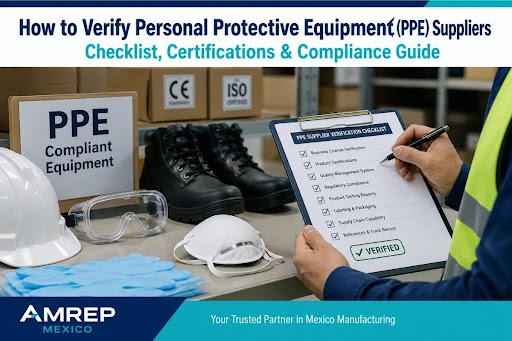
PPE supplier verification is the process of ensuring that a supplier can deliver certified, safe, and regulation-compliant PPE products consistently.
It includes checking:
- Business legitimacy
- Certifications and compliance
- Manufacturing capability
- Product quality standards
- Supply reliability
Types of PPE That Require Supplier Verification
Different PPE categories carry different risks and compliance requirements:
- Respirators and face masks
- Protective gloves
- Safety helmets
- Protective clothing
- Eye and face protection
Each category must meet specific PPE compliance requirements, making verification critical before sourcing.
Why Verifying PPE Suppliers Is Critical
Verifying PPE suppliers is critical because it directly impacts product safety, regulatory compliance, and supply chain reliability.
1. Regulatory Compliance
Products must meet standards such as FDA, CE, ISO, or NIOSH.
2. Safety Assurance
Poor-quality PPE can fail in real conditions, putting users at risk.
3. Avoid Shipment Rejections
Non-compliant products can be blocked at customs.
4. Cost Protection
According to the American Society for Quality (ASQ), poor quality can lead to 5%–20% losses due to defects and returns.
Failure to meet compliance standards can result in shipment rejection, import bans, or financial penalties.
Key Certifications to Check for PPE Suppliers
Different markets require different certifications, and verifying them is essential before placing any order.
- CE Marking (EU) - Indicates that the product meets EU safety, health, and environmental requirements
- FDA Registration (USA) - Required for certain medical PPE products such as masks and gloves
- ISO 13485 - Ensures quality management systems for medical device manufacturing
- NIOSH Certification - Applies to respirators and confirms performance standards
- ANSI Standards - Used for protective equipment such as helmets and eye protection
What to Check in Certifications
- Validity and expiration date
- Issuing authority
- Matching product details
- Authenticity through official databases
Why It Matters
Relying on unverified or fake certifications is a common sourcing mistake. Proper validation ensures your products meet regulatory requirements and reduces the risk of shipment rejection, fines, or safety issues.
How to Verify PPE Suppliers (Step-by-Step)
Verifying PPE suppliers requires a structured process to ensure compliance, quality, and reliability. Skipping any step increases the risk of defects, delays, or non-compliant products.
1. Verify Business Legitimacy
Confirm that the supplier is a legally registered company with a valid business address and operational history. Check company registration documents, export records, and years in operation.
2. Validate Certifications
Request all relevant certifications and test reports, then verify their authenticity with issuing authorities. Ensure the documents match the exact product you are sourcing.
3. Conduct Factory Audits
Factory audits help assess production capacity, quality control systems, and working conditions. This step provides real visibility into whether the supplier can meet your requirements.
4. Test Product Samples
Factory audits help assess production capacity, quality control systems, and working conditions. This step provides real visibility into whether the supplier can meet your requirements.
5. Use Third-Party Inspections
Independent inspections before shipment ensure that products meet quality and compliance requirements, reducing the risk of defects or discrepancies.
6. Review Supplier Track Record
Evaluate past performance, client feedback, and export history. Reliable suppliers demonstrate consistency over time.
PPE Supplier Verification Checklist
Use this checklist to verify PPE suppliers before placing any order:
- Verify business registration and company details
- Confirm valid certifications (CE, FDA, ISO, NIOSH)
- Match certifications with the exact product
- Conduct or review factory audit reports
- Test product samples for quality and compliance
- Arrange a third-party inspection before shipment
- Check supplier's export history and track record
- Ensure clear documentation and communication
Verified vs Unverified PPE Suppliers
| Factor | Verified Supplier | Unverified Supplier |
|---|---|---|
| Certifications | Authentic and validated | Fake, outdated, or unverifiable |
| Product Quality | Consistent and tested | Inconsistent and unreliable |
| Compliance | Meets regulatory standards | High risk of non-compliance |
| Documentation | Complete and accurate | Missing or incorrect |
| Production Capability | Verified through audits | Unknown or unconfirmed |
| Risk Level | Low | High |
| Shipment Reliability | On-time and predictable | Delays and disruptions likely |
To make sure your personal protective equipment suppliers are verified, go through the important questions to ask a new supplier before you start.
Common Mistakes to Avoid When Verifying PPE Suppliers
Even with a structured process, businesses often make avoidable mistakes that increase risk and lead to poor sourcing outcomes.
Choosing Based on Price Alone
Unusually low prices often indicate compromised quality, lack of compliance, or unreliable production.
Skipping Factory Audits
Without audits, there is no visibility into actual production capacity or quality control systems.
To strengthen compliance, learn more about the ISO 13485 supplier audit for medical device companies.
Not Testing Samples
Placing bulk orders without testing samples increases the risk of defects and non-compliant products.
Ignoring Compliance Requirements
Each market has specific regulations. Missing these can result in shipment rejection or legal issues.
Overlooking Supplier Track Record
Suppliers without a proven history or export experience carry a higher risk.
No Third-Party Verification
Relying only on supplier claims instead of independent inspections increases the chance of receiving substandard products.
Real Example: PPE Supplier Verification Failure
A distributor sourced face masks from a low-cost supplier without proper verification.
What happened:
- Certifications were falsified
- Shipment was rejected
- Entire order had to be replaced
Impact:
- 100% financial loss
- Delayed delivery
- Reputational damage
A simple verification process could have prevented this.
How Professional Support Improves PPE Supplier Verification
Managing verification internally can be difficult, especially across international markets.
Professional support helps with:
- Supplier audits
- Certification validation
- Quality inspections
- Compliance checks
- Production monitoring
Professional support adds an extra layer of verification, helping you reduce risk, improve product consistency, and ensure compliance with regulatory standards.
AMREP Supplier Management Services supports global buyers across healthcare, manufacturing, and industrial sectors, providing on-ground expertise in supplier verification, quality control, and compliance support.
Ensure Safe and Compliant PPE Sourcing with AMREP Supplier Management Services
PPE sourcing requires more than just finding a supplier. It requires verification, compliance, and quality control.
Without proper checks, businesses risk non-compliant products, delays, and costly errors.
AMREP Supplier Management Services helps you verify PPE suppliers through factory audits, sourcing and procurement engineering services, ensuring a reliable and compliant supply chain.
Get in touch with AMREP Supplier Management Services to reduce risk and build a more dependable supply chain.
Frequently Asked Questions (FAQ)
What is PPE supplier verification?
It is the process of confirming that a supplier is legitimate, certified, and capable of delivering safe PPE products.
How long does PPE supplier verification take?
It typically takes a few days to a few weeks, depending on audits, document verification, and testing requirements.
What documents should a PPE supplier provide?
Suppliers should provide certifications, test reports, business registration documents, and quality compliance records.
Can I verify PPE suppliers remotely?
Yes, through document checks, video audits, and third-party inspection services, though on-site audits provide deeper verification.
What is the cost of verifying PPE suppliers?
Costs vary depending on audits, inspections, and testing, but are usually much lower than the cost of defective or rejected shipments.
How do I verify a PPE supplier in another country?
Use third-party inspection agencies, local sourcing partners, or professional verification services to ensure accuracy.
What is the difference between OEM and certified PPE suppliers?
OEM suppliers manufacture products, while certified suppliers meet regulatory standards. Not all OEMs are compliant without proper certification.
How often should PPE suppliers be verified?
Suppliers should be verified regularly, especially when placing new orders or scaling production.
Can small businesses verify PPE suppliers effectively?
Yes, by using structured checklists, third-party inspections, and basic verification processes.