Types of Quality Inspection: A Complete Guide for Buyers and Manufacturers
Quality inspections are typically classified based on when they take place during the production process: pre-production inspection, incoming material inspection, during-production inspection, pre-shipment inspection, and container loading inspection.
Alongside these, inspections are also classified by how they are carried out, such as sampling versus full inspection, and by who performs them, whether the supplier, the buyer, or an independent third party.
Choosing the right inspection at the right stage is one of the most effective ways to protect product quality, avoid costly defects, and keep your supply chain running smoothly. This guide breaks down every major type of quality inspection, when to use each, and how they fit together into a complete quality control strategy.
What Is a Quality Inspection?
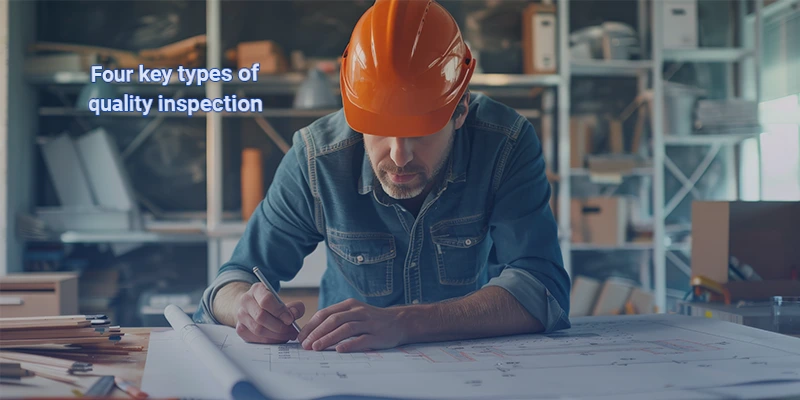
A quality inspection is the process of examining products, materials, or components against a defined set of standards to confirm they meet the required specifications. Inspectors check for defects, measure dimensions, test functionality, verify labeling and packaging, and compare the goods against an approved sample or technical drawing.
The purpose is simple but critical: to catch problems before they reach the customer. A defect found at the factory costs a fraction of what it costs once products have shipped, cleared customs, and landed in a warehouse or, worse, in the hands of an end user. Inspection is the checkpoint that stands between a production line and a shipment.
Quality inspection is not the same as quality control or quality assurance, though the terms are often confused. Quality assurance is the broad system of processes designed to prevent defects. Quality control is the operational side of checking that products meet standards. Inspection is a specific activity within quality control, the hands-on examination of goods at a given point in time. For more on how these overlap, see our guide on quality assurance vs quality control .
How Quality Inspections Are Classified
Before diving into the individual types, it helps to understand the three ways inspections are categorized, because most inspections can be described along all three axes at once.
- By production stage: when the inspection happens, from before production begins to the moment goods are loaded for shipping. This is the most common way to classify inspections and the primary focus of this guide.
- By method: how thoroughly the goods are checked, ranging from inspecting every single unit to examining a statistically selected sample.
- By party: who conducts the inspection, whether it is the supplier itself, the buyer's own team, or an independent third-party inspection company.
With that framework in place, here are the main types.
Quality Inspection Types by Production Stage
The most practical way to think about inspection is along the production timeline. Each stage catches different problems, and together they form a complete quality net from raw materials to finished goods.
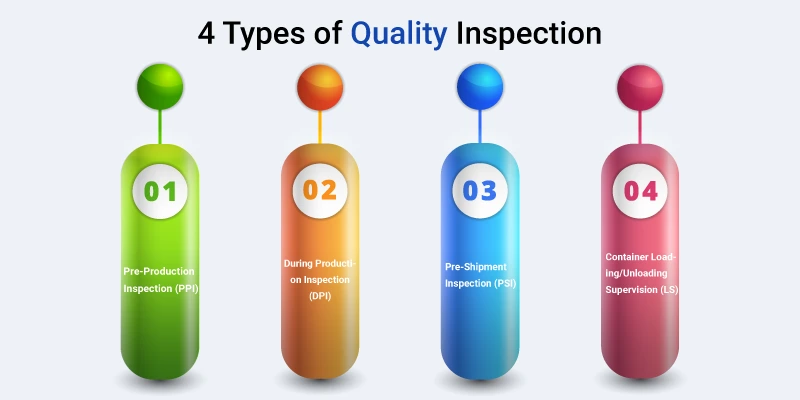
Pre-Production Inspection (PPI)
A pre-production inspection takes place before manufacturing begins. Its goal is to verify that the raw materials, components, and production setup are correct and ready, so problems are caught before a single unit is made.
During a PPI, inspectors typically:
- Review the quality and quantity of incoming raw materials
- Confirm that components match specifications
- Check that the factory understands the requirements
- Assess the production plan and schedule
- Verify that the correct machinery and tooling are in place
The value of a pre-production inspection is prevention. Discovering that a supplier has sourced the wrong fabric, the wrong grade of steel, or an incorrect component before production starts saves enormous time and cost compared to finding out after thousands of units have been built. PPI is especially important for new suppliers, new products, or orders with strict material requirements. Before production even begins, a supplier audit can confirm a factory is capable of meeting your standards in the first place.
Incoming Quality Control (IQC)
Incoming quality control, sometimes called incoming material inspection, focuses specifically on the materials and components a factory receives from its own suppliers before they enter production.
Every finished product is only as good as the parts that go into it. IQC checks those inputs, verifying that raw materials, sub-components, and purchased parts meet quality standards on arrival. This catches defective or substandard inputs at the door, preventing them from being built into finished goods where they are far harder and more expensive to fix.
IQC is a foundational layer of quality control for any manufacturer that relies on a network of sub-suppliers, which is nearly all of them. It is particularly critical in industries like electronics, automotive, and medical devices, where a single faulty component can compromise an entire product.
During-Production Inspection (DUPRO)
A during-production inspection, widely known by the abbreviation DUPRO and sometimes called in-process inspection or DPI, takes place while manufacturing is underway, typically once around 10% to 20% of the order has been completed.
This timing is deliberate. By inspecting early in the production run, any defects or process errors can be identified and corrected before they are repeated across the entire order.
During a DUPRO, inspectors:
- Examine partially finished and completed units
- Check that the production process is consistent
- Review quality against the buyer's standards
- Confirm that issues found in a pre-production inspection have been resolved
DUPRO is one of the most valuable inspection types for large orders and ongoing production, because it provides real-time feedback while there is still time to fix problems. Catching a recurring defect at 15% completion means the remaining 85% can be produced correctly, rather than discovering the flaw in every unit at the end. For a closer look at how this stage compares to a final check, see our guide on DUPRO vs PSI inspections .
Pre-Shipment Inspection (PSI)
The pre-shipment inspection is the most common and widely used type of quality inspection. Also called a final random inspection (FRI), it is conducted when production is complete or nearly complete, usually once at least 80% of the order has been finished and packed.
A PSI is a comprehensive final check before goods leave the factory. Inspectors examine a representative sample of the finished goods and check:
A pre-shipment inspection commonly checks:
- Quantity against the order
- Workmanship and overall appearance
- Function and performance
- Dimensions, weight, and color
- Labeling, barcodes, and packaging
- Compliance with the buyer's specifications and approved sample
Because it happens at the last controllable moment before shipping, the pre-shipment inspection is the buyer's final opportunity to accept or reject a shipment before it leaves. If problems are found, the buyer can require rework, sorting, or a hold on the shipment. For most importers, the PSI is the backbone of their quality control program.
Container Loading Inspection (CLC)
A container loading inspection, also called loading supervision, happens at the very end of the process, as finished goods are being loaded into the shipping container.
While the products themselves may already have passed a pre-shipment inspection, the loading stage introduces its own risks.
During loading, inspectors confirm that:
- The correct products and quantities are loaded
- Packaging is intact and suitable for transit
- Goods are stacked and secured to prevent damage
- The container is clean, dry, and in good condition
This inspection protects against a specific set of problems: wrong quantities shipped, mixed or substituted goods, damage during loading, and improper handling that could ruin products in transit. For high-value or fragile shipments, container loading supervision provides valuable peace of mind that what passed inspection is actually what makes it onto the vessel.
Quality Inspection Types by Method
Beyond timing, inspections differ in how thoroughly goods are checked. This choice balances cost, speed, and risk.
Full Inspection (100% Inspection)
In a full inspection, every single unit in the order is examined individually. Nothing is left to chance, and every defective item can be identified and removed.
The advantage is obvious: maximum defect detection. The drawbacks are cost and time, since inspecting every unit is labor-intensive and slow. Full inspection is typically reserved for:
- High-value or safety-critical products
- Small production runs
- Suppliers with a history of quality problems
- Sorting defects out of a batch that failed a sampling inspection
Sampling Inspection
Sampling inspection examines a statistically selected portion of the order rather than every unit, then uses the results to judge the quality of the entire batch. This is the standard approach for most consumer goods, because it delivers reliable quality assurance at a fraction of the cost and time of full inspection.
Accurate sampling depends on a structured methodology, and AQL provides that framework.
Understanding AQL Sampling
Acceptable Quality Limit, or AQL, is the statistical backbone of modern sampling inspection. It defines the maximum number of defective units that can be present in a sample before the entire batch is rejected.
AQL is based on internationally recognized standards, most commonly ISO 2859-1. Using these standards, an inspector determines how many units to pull from an order based on the total order size and a chosen inspection level, then applies acceptance and rejection numbers for different categories of defects.
Defects themselves are usually sorted into three levels of severity:
- Critical defects: the most serious, rendering a product unsafe or unusable, and almost never tolerated
- Major defects: significant flaws likely to cause a product to be returned or to fail
- Minor defects: small imperfections unlikely to affect usability or a customer's decision to keep the product
Buyers set different AQL thresholds for each category, typically allowing zero critical defects, a small percentage of major defects, and a slightly higher percentage of minor ones.
The power of AQL is that it lets a buyer make a confident, statistically valid decision about an entire shipment by inspecting only a manageable sample. It removes guesswork and gives both buyer and supplier a clear, objective standard for what passes and what does not.
Quality Inspection Types by Party
The final way to classify inspections is by who performs them, and this has a major impact on objectivity and trust.
First-Party Inspection
A first-party inspection is conducted by the manufacturer or supplier itself, using its own internal quality team. This is the factory checking its own work.
Internal inspection is a normal and necessary part of any well-run factory, and it catches many problems early. The limitation is objectivity. A supplier inspecting its own goods has an inherent interest in passing them, so first-party inspection alone is rarely sufficient reassurance for a buyer, particularly across long distances.
Second-Party Inspection
A second-party inspection is carried out by the buyer or a representative of the buyer, such as the buyer's own quality staff or sourcing team visiting the factory.
This gives the buyer direct oversight and firsthand knowledge of quality. The challenge is practicality and cost. Sending your own people to inspect goods, especially overseas, is expensive and difficult to scale, which is why many buyers turn to the third option.
Third-Party Inspection
A third-party inspection is performed by an independent inspection company that has no stake in either the sale or the purchase. This independence is exactly what makes it valuable.
A third-party inspector provides an objective, professional assessment of quality on the buyer's behalf, on the ground at the factory. Because they are neutral, their findings carry credibility with both parties. Third-party inspection is the standard solution for importers sourcing from distant suppliers, offering the oversight of a second-party inspection without the cost and logistics of sending your own team. It is the model most global buyers rely on to protect quality at scale.
How to Choose the Right Inspection Type
With so many options, the right approach depends on your product, your supplier relationship, and your risk tolerance. A few guiding principles help:
- For a new supplier or first order: layer multiple inspections across the timeline, since you have no track record to rely on. A pre-production, during-production, and pre-shipment inspection together give strong coverage.
- For established, reliable suppliers: a pre-shipment inspection may be enough, supplemented by occasional during-production checks.
- For high-value, safety-critical, or complex products: lean toward more thorough methods, including full inspection where the stakes justify it.
- For large orders: prioritize during-production inspection, because catching a recurring defect early saves the entire remaining run.
- For any shipment where objectivity matters: use third-party inspection rather than relying solely on the supplier's own checks.
Most robust quality programs combine several inspection types into a coordinated plan rather than relying on a single checkpoint. The goal is a continuous quality net, not one final gamble at the end.
The Benefits of Quality Inspection
Investing in the right inspections pays off in ways that extend well beyond catching defects. A strong inspection program:
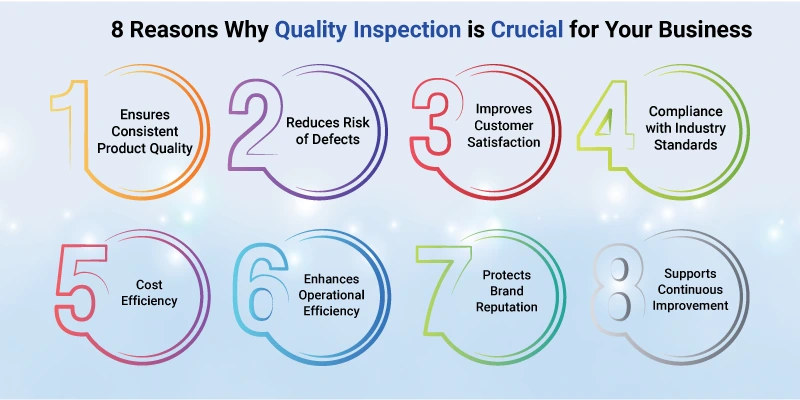
- Protects your brand by keeping faulty products from reaching customers
- Reduces costly returns, chargebacks, and warranty claims that erode margins
- Provides objective documentation you can use in disputes with suppliers
- Strengthens supplier relationships by setting clear, measurable quality expectations
- Gives you the confidence to scale sourcing, knowing that quality is verified rather than assumed
Perhaps most importantly, inspection shifts quality from a hope to a certainty. Instead of trusting that a distant factory has done everything right, you have evidence, and evidence is what allows a business to grow without fear of a quality disaster.
Build Inspection Into Your Supply Chain with AMREP
Quality inspection is not a single event but a strategy. The strongest supply chains treat inspection as an ongoing discipline, applied at the stages where it delivers the most value, carried out with the right method, and performed by parties whose findings can be trusted.
From pre-production checks that catch material errors before they start, to during-production inspections that stop defects from repeating, to pre-shipment and loading inspections that guard the final handoff, each type plays a distinct role. Combined thoughtfully and grounded in AQL sampling standards, they turn quality from a source of anxiety into a competitive advantage.
AMREP ensures every stage of production meets your quality expectations. We help businesses protect product quality and reduce sourcing risk with professional, independent inspection and supplier quality services on the ground where you manufacture. Whether you need a single pre-shipment inspection or a full quality control program across your supply chain, our quality inspection services give you the confidence that what you order is what you receive.