Inline (DUPRO) vs Final Random (PSI) Inspections for Apparel in Mexico
The most essential inspection methods used in apparel manufacturing are During Production Inspections (DUPRO) and Final Random Inspections (PSI). Inline or during production inspections (DUPRO) help identify defects while manufacturing is in progress, allowing brands to correct problems early and maintain consistent quality standards. On the other hand, Final Random Inspections (PSI), conducted after production is complete, verify that finished goods meet specifications, comply with packaging and labelling requirements, and are ready for export.
This blog explains the key differences between DUPRO and PSI, their benefits, timing, and best practices to help apparel brands improve quality control in Mexico.
What Is an Inline (DUPRO) Inspection?
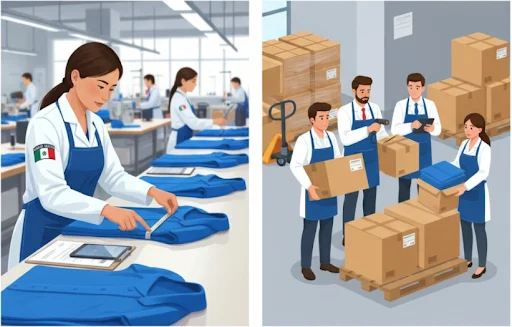
A DUPRO, also referred to as DPI (During Production Inspection) or Inline Product Inspection, is conducted when 10% to 60% of production is complete and packing for export has begun. It integrates into your broader quality assurance program and allows you to intervene early.
Key Benefits
- Allows early detection of deviations in materials, workmanship, or brand specifications.
- Saves time and money by avoiding defects that would otherwise proliferate.
- Closely monitors production pace and adherence to specifications.
- Spotlights non-conformities early to prevent costly fixes later.
- Ensures consistency in quality across batches.
- Supports supplier management and creates visibility in the manufacturing process.
- Drives higher reliability at delivery and better customer confidence.
Recommended Timing
Best scheduled between 20% and 60% of production completed, giving ample time for corrective action while representing the batch's quality. Especially useful for large orders, tight shipping deadlines, and as a follow-up to Pre-Production Inspections.
DUPRO Process Overview
- Planning & Checklist Setup: The importer, the factory, and the QC provider agree on scope, criteria, and statistical sampling plan (ISO 2859-1 / ANSI/ASQ Z1.4).
- Random Sampling: Samples are selected randomly from ongoing production.
- Quality Assessment: Inspectors evaluate design, size, materials, workmanship, consistency, functionality, packaging readiness, and sample against the approved specs.
- Process Review: Inspection covers operator skills, equipment status, workflow health, and risk areas.
- Reporting: A detailed report includes findings, photos, deviation analysis, and suggestions.
- Corrective Action: The factory implements fixes immediately (e.g., adjusting sewing tension and improving shade control).
- Follow-up: Re-inspection or continued monitoring ensures that corrective actions are practical.
DUPRO Inspection Criteria
- Product specifications: design, materials, size, color.
- Workmanship: stitching, assembly, finishing.
- Consistency across units.
- Functionality if applicable (e.g., closure performance).
- Packaging/labelling readiness.
- Production rhythm and schedule alignment.
- Safety and compliance checks.
Example
At a Puebla factory producing 8,000 polos, a DUPRO at 30% completion revealed uneven collar stitching and dye lot variability. Adjustments were made, preventing over 2,000 defective units and minimizing rework.
What Is a Final Random (PSI) Inspection?
A Final Random Inspection (PSI), also called Pre-Shipment Inspection, is conducted when 80% to 100% of production is finished and at least 80% of goods are packed for shipment. Inspectors visit the site, randomly sample units via ISO 2859-1, and factor in Acceptable Quality Limits (AQL) customized to the product and brand needs of the client.
PSI Benefits
- Prevents business losses from shipping non-compliant products.
- Reduces returns, rejections, and delays at customs or retailers.
- Validates the final product before it leaves the factory.
- Helps catch and correct order assortment, label, barcode, or packaging issues.
- Enforces performance and safety standards on finished units.
- Helps streamline warehouse and logistics planning.
Ideal Timing
Conducted when goods are 80–100% finished and at least 80% packed, typically 3–5 days before scheduled shipment. This allows time to correct issues without derailing shipping schedules.
PSI Process Steps
- Booking & Coordination: Arrange with the QC provider and factory.
- Random Sampling: Follow ISO 2859-1 and predetermined AQL thresholds.
- Inspection & Testing: Check workmanship, dimensions, labelling, barcodes, packaging, assortment, and run on-site tests such as drop-tests, barcode scanning, colourfastness, smell test, GSM, and adhesive checks.
- Defect Classification: Tally defects into critical, significant, and minor categories per the AQL chart.
- Reporting & Decision: Receive a detailed report; decide to send, hold, or rework.
PSI Coverage Areas
- Appearance and visual inspection.
- Quantity verification.
- Conformity to the approved sample and specifications.
- Workmanship and construction quality.
- Functional and safety testing.
- Packaging, labelling, cartons, manuals, and accessories.
- Barcode, logo, shipping info, carton weight, and drop safety.
Example
In Guanajuato, a PSI on a 5,000-piece activewear order revealed mislabeling on 120 leggings and barcode mismatches on 30 cartons. Corrective relabeling and repackaging were executed promptly, preventing retailer rejection and additional shipping costs.
Inline (DUPRO) vs Final Random (PSI): A Quick Comparison
Understanding the key differences between Inline (DUPRO) inspections and Final Random (PSI) inspections helps apparel buyers choose the right quality control strategy when sourcing from Mexico.
| Aspects | Inline (DUPRO) | Final Random (PSI) |
|---|---|---|
| Timings | During production, 20–60% complete | After production, ≥80% packed |
| Objectives | Prevent defects early | Confirm quality before shipment |
| Focus Areas | Work-in-progress, trims, stitching, measurements | Finished products, packaging, and labelling |
| Inspection Method | Spot checks and process audits | AQL-based random sampling |
| Onsite Tests | Shade checks, trims verification, in-line measurements | Carton drop test, barcode scan, colourfastness, GSM, functionality tests |
| Corrective Action | Immediate adjustments possible | Limited—mostly holds shipment or rework |
| Risk Impact | Avoids mass defects | Prevents defective goods from shipping |
| Best For | New suppliers, complex designs, bulk orders, tight deadlines | Retail shipments, labelling compliance, and final approval |
When to Use DUPRO vs PSI (or Both)
Use DUPRO when:
- Working with new factories or suppliers
- Launching new styles or complicated garments
- Facing strict delivery timelines where late-stage fixes are costly
Use PSI when:
- Shipping large volume orders to retailers
- Dealing with strict compliance demands (labels, packaging, barcodes)
- Waiting for a final green light before dispatch
Best Practice: Combine Both
For high-value or compliance-intensive orders, combining DUPRO and PSI provides layered protection:
- DUPRO catches issues early in the production process.
- PSI ensures the final shipment is defect-free and compliant.
Using both strategies minimizes risk, reduces rework, and protects both delivery schedules and brand reputation—especially crucial in Mexico’s fast-paced apparel hubs.
Checklist for Apparel Inspections
For DUPRO (Inline):
- Stitching consistency and seam strength
- Shade and fabric hand-feel comparison
- Trim correctness (buttons, zippers, labels)
- In-line measurements vs size chart
- Operator skill and workflow review
For PSI (Final Random):
- AQL-based sample checks
- Packaging, folding, and barcode validation
- Carton labelling accuracy
- Assortment accuracy per PO
- Final appearance under controlled lighting
Digitization & Performance Tracking: A Modern QC Approach
In the apparel manufacturing industry, digital inspection tools and dashboards are transforming how quality control is managed. By integrating DUPRO and PSI inspections into digital platforms, brands gain real-time visibility, faster decision-making, and data-driven insights into performance.
1. Real-Time Data for Faster Decisions
Traditional QC reporting often involves manual paperwork and delayed communication. By the time inspectors submit reports, production has already moved forward, making it harder to fix defects.
With digital inspection dashboards:
- Inspectors upload defect data, images, and test results instantly.
- Brands, suppliers, and quality managers access reports in real-time.
- Corrective actions can be implemented within hours, not days.
Example:
A Monterrey-based sportswear brand implemented a digital QC platform named Inspectorio Sight during a DUPRO inspection. Inspectors detected stitching misalignment in 150 activewear tops. Instead of waiting two days for reports, the data was uploaded instantly, and the factory adjusted machine settings the same day, preventing 1,200 defective garments from entering bulk production.
2. Self-Inspections via Mobile Platforms
Factories in Mexico can perform self-inspections using mobile apps guided by predefined checklists. Brands receive real-time photos, defect reports, and corrective updates, reducing dependency on third-party inspections while saving time and costs.
Studies show that digital self-inspections deliver an ROI between 40% and 221% by:
- Minimizing the need for repeated third-party visits.
- Speeding up issue detection and resolution.
- Reducing duplicate inspections before shipment.
Example:
A Guanajuato denim manufacturer started using a mobile self-inspection tool named QIMA One during PSI. The app guided factory staff through AQL-based sampling, barcode checks, and packaging validation. Quality issues by suppliers such as mismatched carton labels were identified and corrected before the inspector’s arrival, resulting in a $4,500 savings in re-inspection fees and preventing shipment delays.
3. Leveraging KPIs for Continuous Improvement
Digital platforms enable the easy tracking of performance metrics (KPIs) across factories, suppliers, and production batches. The most critical KPIs include:
a) First Pass Yield (FPY)
Measures the percentage of garments that pass inspection the first time, without rework. A high FPY signals strong process control; a low FPY points to workmanship or training issues.
Example:
An activewear supplier in Puebla raised its FPY from 78% to 94% in three months by analyzing DUPRO data. They discovered most rework was caused by inconsistent elastic tension on leggings. A simple machine calibration reduced recurring defects.
b) Defect Rates
Tracks defects by severity: critical, major, and minor. Allows brands to pinpoint systemic issues and train operators accordingly.
Example:
A Querétaro-based T-shirt factory used digital PSI data to analyze major defects across 10,000 units. The dashboard revealed that 12% of defects came from incorrect screen-print alignment. The factory retrained print operators, reducing major defect rates by 40% in the next batch.
c) Customer Satisfaction & Return Rates (CSAT)
Measures the effect of quality on customer experience and post-delivery performance. Helps brands connect inspection data with market outcomes.
Example:
A U.S. retailer sourcing Mexico-made premium denim noticed a high return rate (9%) due to zipper malfunctions. By integrating PSI test results into their dashboard, they traced the issue back to a single hardware supplier in León. After switching vendors, return rates dropped to 2%, boosting customer satisfaction and protecting the brand’s reputation.
Take Control of Your Apparel Quality in Mexico with AMREP Mexico
In Mexico's growing apparel industry, relying on final inspections alone is no longer enough. By integrating During Production Inspections (DUPRO) and Final Random Inspections (PSI), supported by digital dashboards and real-time reporting, you can catch defects early, ensure compliance, and deliver consistent quality every time.
At AMREP Mexico, we specialize in end-to-end garment quality inspection services for global brands. Don’t let defects, rework, or shipping delays impact your bottom line.
Contact AMREP Mexico today to design a customized quality inspection strategy for your apparel production and deliver error-free products on time, every time.