Supply Chain Risk Management Policy Template: What to Include
Supplier audits are one of the fastest ways to reduce quality escapes, protect customers, and prevent expensive surprises only if you audit the right suppliers at the right frequency for the right reasons. The mistake many organizations make is treating audit frequency as a fixed calendar event where everyone gets audited annually rather than a living, risk based program.
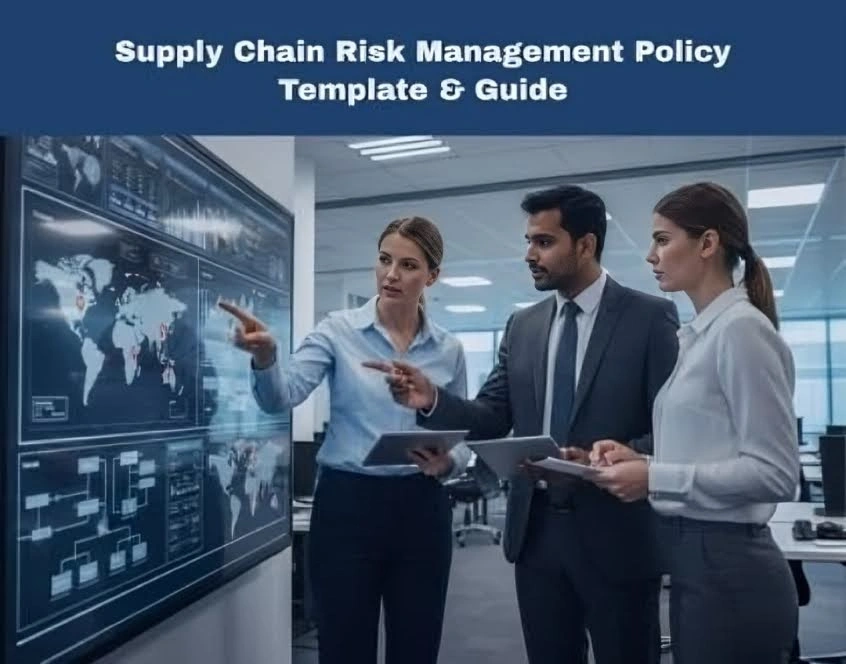
A Supply Chain Risk Management Policy (SCRMP) outlines risk ownership, supplier risk assessment, mitigation strategies, business continuity planning, and ongoing monitoring. Without these elements, organizations are exposed to supply disruptions and unclear response processes.
This guide explains what a Supply Chain Risk Management Policy is, why it matters, and what to include in a comprehensive and effective policy.
What Is a Supply Chain Risk Management Policy?
A Supply Chain Risk Management Policy is a formal document that defines how an organization identifies, evaluates, mitigates, monitors, and responds to risks that could disrupt its supply chain. It establishes roles, responsibilities, processes, and governance structures to ensure continuity of operations and protection of business objectives.
Unlike ad hoc risk responses, an SCRM policy provides a structured and repeatable framework that aligns supply chain decisions with enterprise risk management, compliance, and strategic goals.
Why a Supply Chain Risk Management Policy Is Critical
A well-defined SCRM policy helps organizations:
- Reduce supply disruptions and downtime
- Improve supplier reliability and performance
- Protect revenue, reputation, and customer trust
- Ensure regulatory and contractual compliance
- Enhance resilience and agility in volatile markets
- Support informed decision-making and contingency planning
Organizations without a documented policy often face fragmented risk responses, unclear accountability, and delayed recovery during disruptions.
Key Objectives of a Supply Chain Risk Management Policy
Before drafting the policy, it is important to define its objectives. Common objectives include:
- Proactively identifying supply chain risks
- Assessing risks based on likelihood and impact
- Reducing exposure to critical supplier failures
- Ensuring continuity of supply for essential goods and services
- Establishing clear escalation and response protocols
- Aligning supply chain risk practices with corporate governance
These objectives guide the structure and content of the policy.
Quick Supply Chain Risk Management Policy Template
Company Name: [Insert Name]
Policy Owner: [Role / Department]
Effective Date: [DD/MM/YYYY]
Review Cycle: Annual
1. Purpose
This policy defines how the organization identifies, assesses, mitigates, and monitors supply chain risks to ensure business continuity, compliance, and operational resilience.
2. Scope
Applies to all supply chain activities and all suppliers, including critical and strategic vendors.
3. Responsibilities
- Management: Oversight and approval
- Procurement/Supply Chain: Supplier risk identification and mitigation
- Business Units: Support continuity planning
- Suppliers: Compliance with risk and continuity requirements
4. Risk Identification
Risks are identified across operational, financial, regulatory, cybersecurity, geopolitical, environmental, and ESG categories.
5. Risk Assessment
Risks are evaluated based on likelihood and impact and classified as low, medium, high, or critical.
6. Risk Mitigation
Mitigation may include supplier diversification, contractual controls, inventory buffers, and alternative sourcing.
7. Business Continuity
Contingency plans and alternative suppliers are maintained for critical materials and services.
8. Incident Escalation
Significant supply disruptions are reported and escalated according to defined procedures.
9. Monitoring & Review
Supplier risks and performance are monitored regularly. This policy is reviewed annually or after major disruptions.
Approved By: ____________________
Date: __________________________
Core Components of a Supply Chain Risk Management Policy
To build an effective policy, these requirements must be clearly documented and consistently applied. The following section breaks down the core components every Supply Chain Risk Management Policy should include.
1. Policy Purpose and Scope
This section explains why the policy exists and who it applies to.
What to include:
- Purpose of the policy (e.g., to manage and mitigate supply chain risks)
- Scope of coverage (global, regional, business-unit specific)
- Types of suppliers covered (direct, indirect, critical, strategic)
- Activities included (procurement, logistics, manufacturing, distribution)
Example:
This policy establishes a framework for identifying, assessing, and
managing
supply chain risks that may impact the organization’s operations, financial performance,
and regulatory compliance.
2. Definitions and Terminology
Clear definitions ensure consistent understanding across departments and stakeholders.
Common terms to define:
- Supply chain risk
- Critical supplier
- Single-source dependency
- Risk likelihood and impact
- Business continuity
- Force majeure
Including definitions reduces ambiguity and improves policy enforcement.
3. Governance and Roles & Responsibilities
This section outlines who is accountable for managing supply chain risks.
Typical roles include:
- Board of Directors or Executive Management (oversight)
- Risk Management Committee
- Supply Chain / Procurement Team
- Compliance and Legal Teams
- IT and Cybersecurity Teams
- Business Unit Leaders
- Key Suppliers and Partners
Best practice: Clearly assign ownership for risk identification, monitoring, mitigation, and reporting to avoid gaps or overlaps.
4. Supply Chain Risk Identification
This section defines how the organization identifies potential risks across the supply chain.
Common risk categories include:
- Operational Risks: Supplier delays, capacity constraints, quality issues
- Financial Risks: Supplier insolvency, currency fluctuations, cost volatility
- Geopolitical Risks: Trade restrictions, sanctions, political instability
- Regulatory Risks: Non-compliance with laws, environmental or labor standards
- Cybersecurity Risks: Data breaches, ransomware attacks on suppliers
- Environmental Risks: Natural disasters, climate-related disruptions
- Reputational Risks: Ethical violations, ESG failures, forced labor
Organizations should use tools such as supplier assessments, audits, risk mapping, and external intelligence to identify risks.
5. Risk Assessment and Prioritization
Once risks are identified, they must be assessed to determine their severity.
What to include:
- Risk scoring methodology (likelihood × impact)
- Qualitative vs quantitative assessment approaches
- Risk tolerance and acceptance thresholds
- Identification of critical and high-risk suppliers
Best practice: Use a standardized risk matrix to prioritize risks and focus resources on the most critical vulnerabilities.
6. Supplier Risk Management and Due Diligence
Suppliers are often the largest source of supply chain risk.
This section should cover:
- Supplier onboarding and qualification criteria
- Financial stability checks
- Compliance with regulatory, ethical, and ESG standards
- Cybersecurity and data protection requirements
- Geographic and single-source risk analysis
Ongoing supplier monitoring, not just initial due diligence, is essential for effective risk management.
7. Risk Mitigation Strategies
This section explains how identified risks are reduced or controlled.
Common mitigation strategies include:
- Supplier diversification and dual sourcing
- Safety stock and inventory buffers
- Contractual protections and service-level agreements
- Alternative logistics routes and carriers
- Nearshoring or reshoring strategies
- Supplier development and collaboration
The policy should clarify when mitigation is required and who approves mitigation plans.
8. Business Continuity and Contingency Planning
A strong SCRM policy integrates with Business Continuity Planning (BCP).
What to include:
- Identification of critical materials and services
- Pre-approved alternative suppliers
- Emergency sourcing procedures
- Inventory and production continuity plans
- Crisis response and communication protocols
This ensures the organization can continue operating during major disruptions.
9. Incident Management and Escalation
This section defines how supply chain disruptions are reported and managed.
Key elements include:
- Incident identification and reporting timelines
- Escalation thresholds and authority levels
- Internal and external communication responsibilities
- Coordination with legal, compliance, and customer teams
Clear escalation procedures reduce response time and minimize business impact.
10. Monitoring, Reporting, and Key Risk Indicators (KRIs)
Supply chain risk management is an ongoing process.
Include:
- Key Risk Indicators (KRIs) for suppliers and logistics
- Performance and compliance metrics
- Regular risk reporting to management
- Use of dashboards, audits, and reviews
Continuous monitoring enables early detection of emerging risks.
11. Technology and Data Management
Technology plays a critical role in modern supply chain risk management.
This section may address:
- Use of risk management software and analytics
- Supplier data management and transparency tools
- Cybersecurity controls and data protection standards
- Integration with ERP and procurement systems
Technology should support visibility, automation, and informed decision-making.
12. Training and Awareness
A policy is only effective if people understand it.
What to include:
- Training requirements for supply chain and procurement staff
- Awareness programs for risk identification and escalation
- Supplier education and collaboration initiatives
Regular training ensures consistent application of the policy.
13. Compliance, Audits, and Enforcement
This section explains how compliance with the policy is ensured.
Include:
- Internal and external audit requirements
- Consequences of non-compliance
- Corrective action and remediation processes
Linking the policy to governance and compliance frameworks strengthens accountability.
14. Policy Review and Continuous Improvement
Supply chain risks evolve constantly.
Best practice is to include:
- Review frequency (e.g., annually or after major incidents)
- Approval authority for updates
- Continuous improvement and lessons-learned process
This ensures the policy remains relevant and effective.
For more detailed guidance on assessing suppliers, see our guide on How to Conduct a Technical Evaluation of a New Supplier in Mexico
Best Practices for Implementing a Supply Chain Risk Management Policy
Defining the policy is only the first step. To ensure it delivers real value, it must be implemented consistently across teams and suppliers. The following best practices help organisations effectively implement a Supply Chain Risk Management Policy.
- Align the policy with enterprise risk management (ERM)
- Focus on critical suppliers and high-impact risks
- Balance risk mitigation with cost and operational efficiency
- Encourage cross-functional collaboration
- Use data and analytics to support decisions
- Treat suppliers as partners, not just vendors
Common Mistakes to Avoid
Even the best Supply Chain Risk Management Policy can fail if it is not applied correctly. Many organizations make avoidable mistakes that reduce the effectiveness of their risk management efforts. Understanding these common pitfalls can help you strengthen your policy and improve supply chain resilience.
- Treating the policy as a one-time document: Risk management is ongoing. Policies must be regularly reviewed and updated to reflect new threats and changes in the supply chain.
- Overlooking tier-2 and tier-3 supplier risks: Risks don’t just come from direct suppliers. Sub-tier suppliers can introduce disruptions, compliance issues, or reputational damage.
- Failing to assign clear ownership: Without defined roles, risks can fall through the cracks, and responses are delayed.
- Ignoring cybersecurity and ESG risks: Modern supply chains face digital threats and sustainability expectations. Overlooking these can lead to operational, regulatory, and reputational losses.
- Relying solely on reactive responses: Waiting until a disruption occurs increases downtime and costs. Proactive monitoring and mitigation are essential.
Avoiding these pitfalls not only enhances resilience but also ensures that your supply chain policy delivers long-term operational value, regulatory compliance, and a strategic advantage.
To streamline your supplier assessments, check out our Supplier Audit Report Template for a ready-to-use framework.
Partner with AMREP Mexico to Strengthen Your Supply Chain
Effective supply chain risk management starts with a well-defined policy that identifies risks, assigns ownership, and establishes mitigation and monitoring processes. By implementing a structured approach, organizations can reduce disruptions, ensure compliance, and improve supplier performance across the network.
For companies looking to strengthen supplier reliability and drive operational excellence, AMREP Mexico’s Supplier Quality Engineering services provide expert support in risk assessment, supplier audits, quality control, and process improvement. Partnering with AMREP ensures that your supply chain is not only resilient but also aligned with the highest standards of quality and compliance.