Forced Labor Detection and Compliance in SA8000 Audits: A Practical Guide
The SA8000 Standard, developed by Social Accountability International, provides a recognized framework for preventing forced labor and promoting responsible workplace practices. SA8000 audits strictly prohibit forced labor, human trafficking, and bonded labor through structured assessments that include document reviews, site inspections, and confidential worker interviews. According to the International Labour Organization, 27.6 million people are trapped in forced labor globally, with nearly 86% of cases occurring in the private sector.
This blog explains how forced labor is defined under SA8000, the key indicators auditors identify during assessments, and the compliance measures organizations must implement to prevent forced labor risks.
What Is Forced Labor?
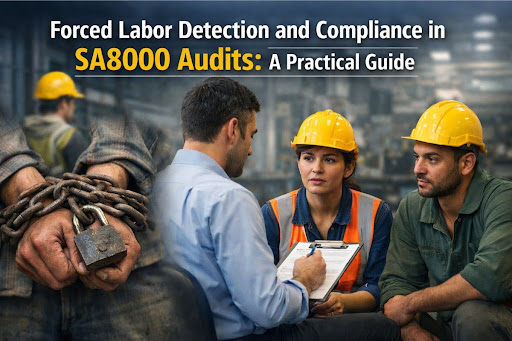
Forced labor refers to work performed involuntarily under threat, coercion, or penalty. The International Labour Organization defines forced labor as any work or service extracted from a person under the threat of penalty and for which the person has not offered themselves voluntarily.
Common forms of forced labor include:
- Debt bondage caused by recruitment fees
- Confiscation of passports or identity documents
- Restrictions on worker movement
- Withholding wages to prevent workers from leaving
- Threats, intimidation, or abuse of vulnerability
Forced labor affects millions of workers worldwide and often disproportionately impacts vulnerable populations. Studies from the International Labour Organization show that women and girls account for more than 50% of forced labor victims globally, particularly in sectors such as domestic work, manufacturing, and agriculture.
Understanding Forced Labor in the SA8000 Framework
The SA8000 Standard requires organizations to ensure that all employment is freely chosen and free from coercion. Companies seeking SA8000 certification must demonstrate that they have systems in place to prevent forced labor across their operations and supply chains.
Under SA8000 requirements, organizations must ensure that:
- Workers are not required to pay recruitment or hiring fees
- Employers do not retain workers’ identity documents
- Workers are free to leave the workplace after working hours
- Employment contracts are transparent and understandable
- Workers can terminate employment with reasonable notice
These requirements are designed to protect worker rights and ensure ethical labor practices.
Causes of Forced Labor in Supply Chains
Understanding the root causes of forced labor helps organizations develop effective prevention strategies.
Common causes include:
- High recruitment fees charged to workers
- Lack of worker awareness of employment rights
- Weak labor law enforcement in certain regions
- Informal recruitment systems
- Vulnerability of migrant workers
- Limited transparency in complex supply chains
Studies from the International Labour Organization show that recruitment fees can reach several months of a worker’s salary, pushing many workers into debt bondage.
Industries with Higher Forced Labor Risks
Forced labor risks are particularly high in sectors with complex supply chains. Studies show that more than half of forced labor victims are employed in industries such as manufacturing, construction, and agriculture, where subcontracting and migrant labor are common.
High-risk sectors include:
- Agriculture and food production
- Construction and infrastructure projects
- Textile and garment manufacturing
- Mining and raw material extraction
- Electronics manufacturing
Common Indicators of Forced Labor in SA8000 Audits
During SA8000 audits, auditors examine workplace practices and recruitment processes to identify potential signs of forced labor.
Document and Recruitment Indicators
Auditors review recruitment records and employment contracts to identify unethical hiring practices.
Warning signs include:
- Workers paying recruitment or placement fees
- Lack of clear or written employment contracts
- Contracts that differ from recruitment promises
- Workers unaware of their employment terms or wage rates
- Incomplete or unclear recruitment agency records
Workplace Indicators
Workplace observations may reveal practices that restrict worker freedom.
Indicators include:
- Employers retaining passports or identity documents
- Restricted movement within the workplace or dormitories
- Locked exits or controlled facility access
- Mandatory overtime without worker consent
- Excessive wage deductions or delayed payments
Worker Testimony Indicators
Confidential worker interviews can uncover issues not visible in documentation.
Workers may report:
- Recruitment debts owed to agencies or intermediaries
- Withheld or delayed wages
- Fear of management or retaliation
- Restrictions on leaving employment or resigning
- Threats of penalties, dismissal, or deportation
Recognizing these indicators helps auditors assess whether employment conditions comply with the SA8000 Standard and whether labor is truly voluntary.
Effective Audit Techniques for Detecting Forced Labor
Detecting forced labor requires a combination of document review, worker interviews, and site observations.
1. Worker Interviews
Worker interviews are the most critical component of forced labor detection. Auditors should:
- Conduct interviews in private
- Use trained interpreters if needed
- Interview workers from different departments
- Include migrant and contract workers
Key questions may include:
- Did you pay any recruitment fees?
- Do you hold your passport?
- Are you free to leave the workplace after work?
- Can you resign from your job if you choose?
Confidentiality is essential to ensure workers feel safe speaking openly.
2. Recruitment Process Review
Auditors must review recruitment channels to ensure ethical hiring practices.
Key audit checks include:
- Recruitment agency contracts
- Fee payment records
- Worker recruitment agreements
- Migration documentation
- Agency compliance policies
Organizations should have zero recruitment fee policies and monitor recruitment agencies regularly.
3. Payroll and Wage Analysis
Payroll records can reveal hidden indicators of forced labor.
Auditors should review:
- Wage deductions
- Overtime payments
- Recruitment fee reimbursements
- Wage delays
Unusual deductions or unexplained wage withholding may signal coercive practices.
4. Dormitory and Living Condition Inspections
For facilities providing worker accommodation, auditors must inspect dormitories.
Look for:
- Locked entrances
- Curfews enforced by management
- Surveillance restricting worker movement
- Overcrowded living spaces
Workers must be free to leave accommodation without restrictions.
5. Supply Chain Risk Assessment
SA8000 also requires organizations to address forced labor risks in their supply chains.
Auditors should review:
- Supplier social compliance programs
- Risk mapping
- Corrective action plans
- Supplier monitoring systems
Industries with higher forced labor risks include agriculture, construction, textiles, mining, and electronics manufacturing.
Challenges in Detecting Forced Labor
Despite structured audit procedures, forced labor can be difficult to identify because of the following reasons.
1. Worker Fear and Underreporting
Workers may hesitate to speak openly due to fear of retaliation, job loss, or deportation.
2. Hidden Recruitment Practices
Recruitment fees often occur before workers arrive at the workplace through third-party recruiters.
3. Documentation Manipulation
Organizations may maintain compliant documentation while actual practices differ.
These challenges require experienced auditors and strong worker engagement.
Ensuring Forced Labor Compliance Under SA8000
While detection is critical during audits, organizations must also establish systems that ensure ongoing compliance with the SA8000 Standard. Effective compliance requires clear policies, ethical recruitment practices, and continuous monitoring to prevent forced labor risks.
Ethical Recruitment Practices
Organizations must ensure that recruitment processes are transparent and fair. Key compliance measures include:
- Prohibiting recruitment or placement fees for workers
- Monitoring labor agencies and recruiters for ethical practices
- Providing clear employment terms before hiring
- Ensuring contracts are written in a language workers understand
Protection of Worker Rights
Companies must safeguard workers’ rights and freedom of employment. Important practices include:
- Allowing workers to retain their passports and identity documents
- Ensuring workers can freely leave the workplace after working hours
- Allowing workers to terminate employment with reasonable notice
- Providing clear information on wages, benefits, and working hours
Grievance and Reporting Mechanisms
Accessible grievance mechanisms help workers report concerns safely and confidentially. Effective systems typically include:
- Anonymous reporting channels
- Worker committees or representation structures
- Protection against retaliation
- Procedures for investigating complaints
Continuous Monitoring and Corrective Action
Ongoing monitoring helps organizations maintain compliance and address risks early. Key measures include:
- Regular internal audits and risk assessments
- Monitoring suppliers and recruitment agencies
- Implementing corrective action plans for violations
- Training management and workers on labor rights
By strengthening these systems, organizations can ensure sustained compliance and reduce the risk of forced labor across their operations and supply chains.
Organizations can also use SA8000 audits to identify broader workplace risks beyond labor practices. Learn more in our guide on How to Detect Health & Safety Risks with SA8000 Audits.
SA8000 Auditor Checklist for Forced Labor Detection
During SA8000 audits, auditors often use practical verification checks to confirm that employment is voluntary and compliant.
Key audit checks include:
Recruitment Practices
- Verify that workers did not pay recruitment fees
- Review contracts with recruitment agencies
- Confirm workers received employment terms before hiring
- Check if migrant workers were recruited through licensed agencies
Worker Freedom
- Ensure workers retain passports and identification documents
- Confirm workers can leave the workplace after working hours
- Verify workers can resign without penalties
- Assess whether workers feel free to report concerns
Wages and Contracts
- Check payroll records for unexplained deductions
- Confirm overtime is voluntary and properly compensated
- Verify employment contracts match actual job conditions
Workplace Conditions
- Ensure dormitories do not restrict worker movement
- Check for locked exits or controlled facility access
- Confirm grievance mechanisms are accessible and confidential
To prepare for supplier assessments, review our Supply Chain Audit Checklist outlining the key audit requirements.
Enhance Your Supply Chain Compliance with AMREP Mexico
Forced labor compliance is a cornerstone of SA8000 certification and a critical component of responsible business practices. Reliable supplier audits help identify risks, ensure compliance with labor standards, and protect worker rights across supply chains.
AMREP Mexico supports organizations in strengthening their supply chain integrity through independent supplier auditing services and social compliance assessments. With expertise in international standards and responsible sourcing practices, we help companies identify labor risks, verify compliance, and build more transparent and ethical supply chains.
Contact AMREP Mexico today to learn how our supplier auditing services can support your organization’s social compliance and responsible sourcing goals