Combining ISO 13485 and ISO 14644 in an Audit
Organizations operating in regulated environments, especially medical device manufacturing, pharmaceuticals, biotechnology, and sterile product handling, often need to comply with multiple standards simultaneously. Two of the most critical standards in these environments are ISO 13485, which governs quality management systems for medical devices, and ISO 14644, which defines cleanroom and controlled environment standards. Conducting integrated audits for ISO 13485 and ISO 14644 allows organizations to evaluate quality management systems and cleanroom performance together, creating a more cohesive approach to compliance. This integrated strategy helps streamline audit processes, reduce operational disruption, and ensure that quality systems and environmental controls work in alignment to support consistent, reliable manufacturing outcomes. This guide explains the relationship between the two standards, how to integrate them into a unified audit process, and best practices for preparing, conducting, and improving combined audits.
What Is ISO 13485?
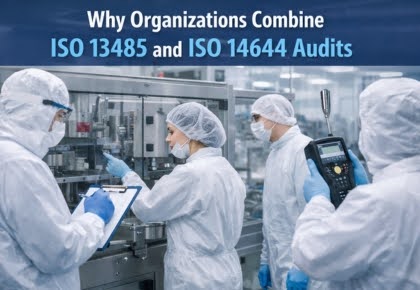
ISO 13485 is an internationally recognized standard for quality management systems (QMS) in the medical device industry. It focuses on ensuring that organizations consistently design, manufacture, and distribute medical devices that meet regulatory and customer requirements.
The standard emphasizes risk management, traceability, regulatory compliance, and documentation throughout the product lifecycle.
Key objectives of ISO 13485
ISO 13485 aims to:
- Establish a structured quality management system
- Ensure consistent product quality and safety
- Maintain regulatory compliance across global markets
- Support risk management throughout product development and manufacturing
- Improve traceability and documentation for medical devices
Organizations certified under ISO 13485 demonstrate that they maintain a robust system for controlling processes, documenting procedures, and monitoring product quality.
What Is ISO 14644?
ISO 14644 focuses on cleanrooms and controlled environments, defining the classification, monitoring, and testing requirements needed to maintain clean environments.
Cleanrooms are essential in industries where contamination can compromise product safety or performance.
ISO 14644 covers areas such as:
- Cleanroom classification
- Airborne particle concentration limits
- Cleanroom design and construction
- Environmental monitoring
- Cleanroom testing and certification
- Maintenance and operational procedures
ISO 14644 ensures that facilities maintain controlled environmental conditions that support safe and compliant manufacturing processes.
Why These Standards Often Overlap
In medical device manufacturing, product quality depends not only on process control but also on environmental control.
For example:
- Sterile device manufacturing requires contamination-free environments
- Implantable devices must be produced under controlled cleanroom conditions
- Microbial contamination can directly affect patient safety
Because of this connection, ISO 13485 and ISO 14644 frequently intersect.
ISO 13485 requires organizations to maintain controlled work environments, while ISO 14644 provides the technical framework for cleanroom management.
Integrating audits of both standards helps ensure that quality management and environmental control are aligned.
Benefits of Combining ISO 13485 and ISO 14644 Audits
Organizations can gain several advantages by combining audits for these two standards.
Reduced audit duplication
Separate audits often review overlapping processes such as:
- environmental monitoring
- contamination control
- process validation
- training records
Combined audits eliminate redundant assessments.
Improved operational efficiency
A unified audit approach reduces disruption to operations and minimizes staff time spent preparing for multiple audits.
Stronger compliance management
Combining audits ensures that environmental controls support quality system requirements.
Better risk management
Integrated audits allow auditors to evaluate contamination risks in relation to product quality and regulatory compliance.
Cost savings
Conducting a single integrated audit is typically less expensive than managing multiple independent audits.
Key Areas Where ISO 13485 and ISO 14644 Intersect
To conduct an effective combined audit, organizations must understand where the two standards overlap.
Cleanroom environment control
ISO 13485 requires organizations to maintain controlled environments when product quality may be affected.
ISO 14644 provides the technical requirements for maintaining cleanroom conditions.
Environmental monitoring
Both standards require monitoring and documentation of environmental conditions.
Audits should examine:
- particle counts
- microbial monitoring
- air flow patterns
- temperature and humidity control
Personnel training
Employees working in controlled environments must be trained in cleanroom behavior and contamination control.
Auditors should review training records to confirm compliance with both standards.
Documentation and records
ISO 13485 emphasizes documentation for all quality processes.
ISO 14644 requires records of environmental testing and cleanroom certification.
Combined audits should verify that documentation is consistent and complete.
Risk management
Risk assessment is central to ISO 13485 and plays a role in determining appropriate cleanroom controls under ISO 14644.
How to Prepare for a Combined ISO 13485 and ISO 14644 Audit
Effective preparation is essential for a successful combined audit.
Organizations should begin by reviewing their quality management system and cleanroom documentation.
Step 1: Conduct a gap analysis
A gap analysis helps identify areas where the organization may not fully meet either standard.
The analysis should review:
- quality procedures
- environmental monitoring programs
- cleanroom design documentation
- risk management processes
Step 2: Align documentation
Documentation should demonstrate how environmental controls support product quality.
This may include:
- contamination control procedures
- cleaning protocols
- gowning requirements
- monitoring schedules
Step 3: Train staff
Personnel must understand both standards and how their roles affect compliance.
Training should cover:
- cleanroom behavior
- contamination prevention
- quality system documentation
- audit procedures
Step 4: Conduct internal audits
Internal audits allow organizations to identify potential issues before the official audit.
These audits should review both quality and cleanroom requirements.
How to Structure a Combined ISO 13485 and ISO 14644 Audit
Combined audits typically follow the structure of a standard quality audit while incorporating cleanroom evaluations.
Opening meeting
The audit begins with an opening meeting where auditors review the audit scope, objectives, and schedule.
Documentation review
Auditors examine quality system documents and cleanroom records, including:
- standard operating procedures
- environmental monitoring reports
- cleanroom certification records
- training documentation
Facility inspection
Cleanroom areas are inspected to verify compliance with ISO 14644 requirements.
Auditors may evaluate:
- air filtration systems
- pressure differentials
- gowning procedures
- contamination control measures
Process evaluation
Auditors review manufacturing processes to ensure they align with quality management and environmental requirements.
Closing meeting
The audit concludes with a meeting summarizing findings and discussing corrective actions.
Common Audit Findings
Organizations preparing for combined audits often encounter similar issues.
Incomplete documentation
Missing or outdated records are one of the most frequent audit findings.
Inconsistent environmental monitoring
Environmental monitoring programs may not align with cleanroom classification requirements.
Training gaps
Personnel may lack sufficient training in cleanroom procedures or quality documentation.
Risk assessment deficiencies
Risk management documentation may not adequately address contamination risks.
Poor integration between departments
Quality teams and facility management teams may operate independently without coordinated procedures.
Best Practices for Successful Combined Audits
Organizations can improve audit outcomes by adopting several best practices.
Create an integrated compliance strategy
Rather than treating ISO 13485 and ISO 14644 separately, develop a unified compliance framework.
Maintain strong documentation control
Ensure that all procedures, records, and monitoring results are properly documented and updated.
Monitor environmental conditions continuously
Regular monitoring ensures that cleanroom conditions remain within acceptable limits.
Conduct routine internal audits
Internal audits help identify compliance gaps before external audits occur.
Promote cross-department collaboration
Quality teams, facility engineers, and production staff should work together to maintain compliance.
How Technology Supports Combined Audits
Modern compliance management tools can significantly improve audit readiness.
Digital quality management systems
Electronic QMS platforms help manage documentation, corrective actions, and audit trails.
Environmental monitoring software
Automated monitoring systems track cleanroom conditions and generate reports.
Data analytics
Analytics tools can identify trends in environmental performance and process quality.
Using technology allows organizations to respond quickly to potential compliance issues.
The Role of Risk Management in Combined Audits
Risk management plays a central role in both standards.
ISO 13485 requires organizations to identify and control risks associated with medical device production.
Cleanroom standards under ISO 14644 help reduce contamination risks that could affect product safety.
A combined audit evaluates how well an organization integrates environmental risk management into its quality system.
This includes:
- identifying contamination risks
- implementing preventive controls
- monitoring environmental conditions
- documenting risk mitigation strategies
How to Structure a Combined ISO 13485 and ISO 14644 Audit
Passing an audit is not the final step in compliance management.
Organizations should treat audits as opportunities for improvement.
Corrective actions
Audit findings should be addressed through structured corrective action plans.
Process optimization
Organizations can use audit results to improve cleanroom operations and quality management systems.
Ongoing monitoring
Continuous monitoring ensures that improvements are sustained over time.
Make sure you're covering all critical areas with this comprehensive supply Chain Audit Checklist
.Future Trends in Integrated Compliance and Auditing
As regulatory expectations evolve, integrated compliance approaches will become increasingly important.
Organizations may need to integrate additional standards such as:
- ISO 14971 (risk management)
- ISO 9001 (quality management)
- GMP regulations
- environmental and safety standards
Combining audits across multiple standards helps organizations maintain efficiency while meeting complex regulatory requirements.
You can explore both the pros and challenges in our Quality Management Benefits and Barriers guide.
Simplify ISO 13485 & ISO 14644 Compliance with Expert Support
Successfully combining ISO 13485 and ISO 14644 audits requires more than simply reviewing two standards at the same time. It involves aligning quality management processes with cleanroom environmental controls, strengthening documentation practices, and ensuring that risk management and contamination control are fully integrated into daily operations.
Organizations that adopt a structured approach to integrated audits are better positioned to maintain regulatory compliance, improve operational efficiency, and protect product quality in highly controlled environments.
AMREP Mexico supports organizations in achieving these goals by providing expert supplier and factory auditing services and guidance in cleanroom compliance, contamination control, and quality system integration. From cleanroom validation and environmental monitoring to audit preparation and compliance support, our team helps businesses navigate complex regulatory requirements with confidence..
Partner with AMREP Mexico to strengthen your compliance strategy, streamline your audit processes, and ensure your cleanroom and quality systems meet international standards.