SMETA Audit: What It Is, What It Checks, and How to Prepare
A SMETA audit (Sedex Members Ethical Trade Audit) is one of the most widely used ethical audit methodologies for assessing social, environmental, and ethical practices in supply chains. It is not a certification, but an audit report and corrective action plan shared through the Sedex platform to reduce audit duplication for suppliers.
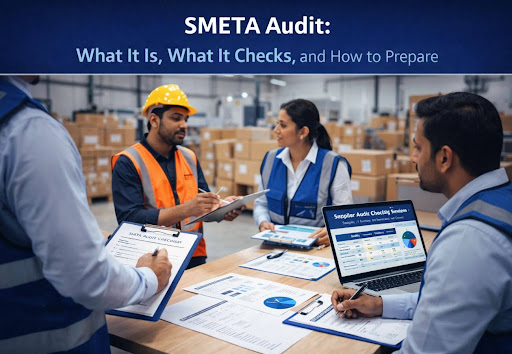
SMETA audits evaluate labor standards, health and safety, environmental management, and business ethics through document reviews, site inspections, and worker interviews. This article explains what a SMETA audit is, what it evaluates, and how organizations can prepare to manage risk and meet customer requirements.
What Is SMETA Audit?
SMETA stands for Sedex Members Ethical Trade Audit. It is an audit methodology developed by Sedex, a global membership organization focused on ethical and responsible supply chains.
A SMETA audit is a standardized assessment used to evaluate a site’s performance against internationally recognized ethical trade standards. It provides a consistent way for suppliers to share audit results with multiple customers, reducing audit duplication while improving transparency.
SMETA is not a certification. Instead, it is an audit framework that helps identify risks, nonconformances, and opportunities for improvement across social, environmental, and ethical business practices.
Why SMETA Audits Are Important
SMETA audits help organizations identify and manage ethical, social, and environmental risks within their operations and supply chains. As customer expectations and regulatory scrutiny increase, these audits provide a structured way to demonstrate responsible business practices.
SMETA audits are important because they:
- Support responsible sourcing requirements
Many global customers require SMETA audits as part of supplier approval and ongoing monitoring. - Improve transparency across the supply chain
Audit results shared through the Sedex platform provide visibility into supplier practices and risk areas. - Identify labor, safety, and environmental risks
Audits highlight gaps that may not be visible through documentation alone, particularly through worker interviews and site inspections. - Reduce audit duplication for suppliers
A single SMETA audit can be shared with multiple customers, reducing time and cost burdens. - Promote continuous improvement
Corrective action plans encourage suppliers to address root causes and strengthen management systems.
By addressing both compliance and risk, SMETA audits play a key role in building ethical, resilient supply chains.
Models of SMETA Audit
SMETA audits can be conducted using different scopes depending on customer requirements and the level of risk associated with the site. The two most common audit models are the 2-pillar and 4-pillar SMETA audits.
2-Pillar SMETA Audit
The 2-pillar audit focuses on the core areas of:
- Labor Standards
- Health and Safety
This model is widely used and suitable for organizations seeking to demonstrate compliance with fundamental worker welfare and workplace safety requirements.
4-Pillar SMETA Audit
The 4-pillar audit provides a broader assessment and includes:
- Labor Standards
- Health and Safety
- Environment
- Business Ethics
This model is often required by customers seeking greater assurance around environmental responsibility and ethical business conduct.
Choosing the appropriate SMETA audit model depends on customer expectations, industry risk, and supply chain complexity.
What Does a SMETA Audit Check?
A SMETA audit evaluates a site’s ethical and responsible business practices through document reviews, facility inspections, and worker interviews, with specific focus on the following key areas based on the Ethical Trading Initiative (ETI) Base Code, local laws, and internationally recognized standards:
1. Labor Standards
Labor practices are a central focus of every SMETA audit. Auditors evaluate whether workers are treated fairly, legally, and ethically.
Key areas reviewed include:
- Freely chosen employment and prohibition of forced labor
- Child labor prevention and age verification processes
- Working hours compliance
- Wages, benefits, and payroll practices
- Non-discrimination and equal opportunity
- Freedom of association and collective bargaining
- Disciplinary practices and grievance mechanisms
Worker interviews are a critical part of this section and often reveal gaps that are not visible in documentation alone.
2. Health and Safety
Health and safety assessments focus on whether the workplace provides a safe and healthy environment for employees.
Auditors typically review:
- Health and safety policies and risk assessments
- Emergency preparedness and evacuation procedures
- Fire safety systems and drills
- Machine safety and guarding
- Use of personal protective equipment (PPE)
- Chemical handling and storage
- Workplace hygiene and sanitation
Site walkthroughs are used to verify that safety controls are implemented in practice, not just documented.
3. Environmental Management (4-Pillar Audits)
For 4-pillar SMETA audits, environmental responsibility is also assessed.
This includes:
- Environmental permits and legal compliance
- Waste management and disposal practices
- Energy and water usage monitoring
- Emissions and pollution controls
- Chemical and hazardous material management
While SMETA is not an environmental certification, auditors assess whether basic environmental controls and legal compliance are in place.
4. Business Ethics (4-Pillar Audits)
Business ethics reviews evaluate how the organization prevents unethical behavior and promotes integrity.
Auditors may assess:
- Anti-bribery and anti-corruption policies
- Whistleblowing mechanisms
- Data protection and confidentiality
- Responsible sourcing practices
- Ethical conduct training
This pillar is increasingly important as customers seek assurance that suppliers operate with transparency and integrity.
How to Prepare for a SMETA Audit?
Preparation is essential for a successful SMETA audit. Effective preparation focuses on real compliance rather than document-only readiness. The following steps are involved in preparing the SMETA Audit:
1. Understand the Audit Scope
Confirm whether a 2-pillar or 4-pillar audit is required and review customer-specific expectations.
2. Review Legal Compliance
Ensure compliance with:
- Local labor laws
- Minimum wage and working hour regulations
- Health and safety requirements
- Environmental permits and licenses
Legal noncompliance often leads to major or critical findings.
3. Strengthen Policies and Procedures
Ensure written policies exist for:
- Labor standards and human rights
- Health and safety
- Environmental management
- Ethical conduct and anti-corruption
Policies should be communicated and understood by employees.
4. Prepare Documentation
Common documents reviewed include:
- Employment contracts and personnel files
- Time and payroll records
- Training records
- Health and safety risk assessments
- Environmental permits
Documentation should be accurate, complete, and consistent with actual practices.
5. Prepare the Facility
Conduct internal inspections to verify:
- Emergency exits are clear
- Fire equipment is accessible and maintained
- PPE is available and used
- Chemical storage is controlled
Physical conditions are heavily weighted in SMETA audits.
6. Train Management and Workers
Employees should understand:
- Their rights and responsibilities
- Health and safety practices
- How to participate in worker interviews
Coaching workers on answers is not acceptable and can result in serious findings.
7. Conduct a Pre-Audit or Gap Assessment
A pre-audit helps identify gaps and prioritize corrective actions before the official SMETA audit.
How to Conduct a SMETA Audit?
A SMETA audit follows a standardized process designed to assess both documented systems and actual working conditions at the site. The audit typically takes one to several days, depending on site size, workforce, and audit scope.
The process generally includes:
Opening meeting
The auditor explains the audit scope, methodology, and agenda, and confirms site details and logistics.
Document review
Policies, procedures, records, and legal documents are reviewed to assess compliance with SMETA requirements.
Site walkthrough
The auditor inspects production areas, warehouses, offices, and worker facilities to verify health, safety, and environmental conditions.
Worker and management interviews
Confidential worker interviews are conducted to validate working hours, wages, treatment, and safety practices. Management interviews support understanding of systems and controls.
Closing meeting
Audit findings, including nonconformances and good practices, are presented. Next steps and corrective action expectations are discussed.
Audit results are documented in a SMETA report along with a corrective action plan and shared through the Sedex platform for customer visibility.
Common SMETA Audit Findings
SMETA audits frequently identify gaps between documented policies and actual practices. Most findings relate to system weaknesses, lack of awareness, or inconsistent implementation rather than intentional misconduct.
Common SMETA audit findings include:
Labor-Related Findings
- Excessive working hours or insufficient rest days
- Inaccurate timekeeping or payroll records
- Lack of documented grievance mechanisms
- Inadequate age verification processes
Health and Safety Findings
- Blocked emergency exits or inadequate signage
- Incomplete fire safety training or drills
- Missing machine guarding
- Inconsistent use of PPE
Environmental Findings
- Improper waste segregation
- Missing environmental permits
- Poor chemical storage practices
Management System Gaps
- Policies not communicated to workers
- Lack of training on ethical or safety requirements
- Weak corrective action follow-up
Responding to SMETA Audit Findings
After the audit, sites are expected to:
- Review findings carefully
- Conduct root cause analysis
- Develop corrective action plans
- Implement actions within agreed timelines
Progress and closure of findings are tracked through the Sedex platform.
Many SMETA findings are linked to weak processes, which can be addressed using the strategies in How To Improve Quality In Manufacturing – 10 Proven Steps.
Benefits of a Well-Managed SMETA Audit
When managed effectively, SMETA audits offer several benefits:
- Improved working conditions
- Reduced legal and reputational risk
- Stronger customer relationships
- Increased transparency and trust
- Continuous improvement in ethical practices
Many SMETA requirements align with management system principles, which are explained in ISO Auditing: Ensuring Global Standards and Quality.
Support SMETA Compliance With AMREP Mexico Supplier Audits
SMETA audits are most effective when supported by experienced, on-site assessments that go beyond documentation and focus on real working conditions and operational practices.
AMREP Mexico provides supplier factory auditing services to support SMETA readiness, ethical compliance, and responsible sourcing programs. These audits help organizations identify social and operational risks, verify supplier capability, and implement effective corrective actions aligned with customer and international standards.
Contact AMREP Mexico to support your SMETA audit preparation, strengthen supplier compliance, and build a more transparent and responsible supply chain.